Leave Your Message
*Name Cannot be empty!
* Enter product details such as size, color,materials etc. and other specific requirements to receive an accurate quote. Cannot be empty
0%

So, the market for Csd Bottle Molds in 2026? It's getting pretty technical, regional, and honestly, buyers are way more demanding now. They're looking at everything from cavity layouts to PET compatibility, cooling efficiency, neck-finish accuracy, and how easy it is to maintain the mold. But here's the thing—just because a mold works great in one factory doesn't mean it'll do the same elsewhere. You've got water quality, how the resin behaves, which machine brand they're using, and even the operator's experience—all of that can totally change the outcome.

Robert A. Malloy is a senior packaging-mold consultant with over twenty years in the business, so when he says, “The best bottle mold is the one that keeps quality stable after thousands of production cycles,” it carries some weight. His point is pretty practical: don’t judge a CSD bottle mold just by its price or how good the first sample looks. The real test is how it holds up over the long run. And there’s no single best option—injection stretch Blow Molding systems, single-stage molds, hot-runner designs, and conventional cold-runner structures each have their own advantages. Look, steel's durability is great for those long production runs—it really holds up. But aluminum tooling? That can save you a ton of money early on, when you're still testing the waters. Honestly, neither option is perfect, you know? You've gotta weigh the trade-offs. And here's the thing: the tiny details can make or break the whole process.

So, this guide takes a look at the main types of Csd bottle molds that are actually worth considering for carbonated drinks in 2026. We're talking lightweight designs, how well they hold up under pressure, cycle times, cooling channels, replacement parts, and what kind of service you get from suppliers. Plus, we compare some common options from big names like Husky, SACMI, and Sidel. But honestly, some of the conclusions are up for debate because every factory is different—like, really different. That uncertainty is something you shouldn't ignore. You know, when you're picking a mold, you might have to try out a few different designs before you find the one that really works. It's not just about gut feeling—you've got to look at the production data, the technical drawings, how the trials went, and don't forget the total cost of owning it. Because here's the thing: the cheapest mold upfront can end up costing you more in the long run if the cooling isn't even or if maintenance takes forever. So yeah, take your time and weigh everything.
2026 Best CSD Bottle Mold Types for Global Buyers?

CSD Bottle Mold Basics: PET, Glass, and Aluminum Forming Routes

Choosing the right CSD bottle mold starts with the forming route, not the catalog image. PET bottles begin as heated preforms. Stretch blow molding then expands them inside a cooled cavity. The mold must control wall thickness, base strength, and carbon dioxide pressure. Sharp ribs can look attractive, but they may create uneven stretching. That detail often appears during pilot production.

Glass follows a different path. A hot gob enters a metal blank mold, then moves into a blow mold. Heat balance matters greatly. Poor cooling can cause thick shoulders, unstable dimensions, or visible stress marks. Experienced buyers should check cavity alignment, venting, surface finish, and mold-life data. A small neck error can disrupt filling and closure performance.

Aluminum bottles commonly use impact extrusion, drawing, ironing, and later neck forming. Their tooling must manage metal flow without tearing thin walls. Internal coating compatibility also deserves attention, especially for acidic or carbonated drinks. An OEM Csd Bottle Mold project should include material samples, trial records, inspection gauges, and replacement-part planning. I have found that drawings alone are not enough. A perfect design can still fail after temperature changes, machine adjustment, or operator learning. Leaving room for correction is practical, not careless.

PET ISBM Molds: 3.0–3.5 CO₂ Volumes and 0.2–2.0 L Formats

For 2026, PET ISBM molds for carbonated soft drink bottles must balance pressure resistance, light weighting, and stable production. The target range of 3.0–3.5 CO₂ volumes creates demanding conditions inside the bottle. Wall distribution cannot be treated as a cosmetic issue. Thin shoulder areas may deform, while uneven bases can affect standing stability and pressure performance.

Formats from 0.2 to 2.0 liters need different mold decisions. A 0.2-liter bottle often requires precise cooling around its narrow body and compact base. A 2.0-liter format needs stronger control of stretch ratios, panel design, and material distribution. Cavity polishing should be consistent, especially around the neck, shoulder, and label panel. Small details matter. Poor venting can leave haze, marks, or incomplete surface replication.

A reliable mold review should examine cavity steel, cooling-channel layout, neck-finish accuracy, and maintenance access. Practical trials should include pressure testing, dimensional checks, and visual inspection after filling. It is easy to select a mold from drawings alone. That approach sometimes fails on the production floor.

Preform design, resin behavior, heating settings, and machine alignment can change the final result. Mold suppliers should therefore provide measurable tolerances, trial data, and replacement plans.

I would also question extremely aggressive lightweighting targets. They may reduce material use, but they can narrow the processing window and increase rejection rates. There is no perfect mold, only a better match between bottle format, carbonation level, equipment, and operating discipline.

Preform Mold Design: 28–48 mm Neck Standards and Hot-Runner Control

For 2026 CSD bottle projects, preform mold design begins with the neck finish. Common standards range from 28 to 48 mm, but selection should follow filling speed, closure weight, and bottle volume. A 28 mm neck reduces resin use and suits many lightweight containers. Larger 38 mm or 48 mm finishes can improve handling and pouring for bigger packages. They also demand stronger preform support.

In practical mold trials, I check neck concentricity, thread definition, and demolding force at every cavity. Small errors can create cap leakage later. Hot-runner control matters just as much. Balanced flow channels should keep melt temperature stable across all cavities. Individual valve timing helps reduce gate vestige, stringing, and uneven preform weight. Temperature sensors near the manifold provide useful evidence, not guesses.

Do not trust a standard blindly.

An ODM Csd Bottle Mold should allow adjustable processing windows, because one resin grade may behave differently from another. I have seen a technically correct design produce cloudy preforms after cooling changes. That result required more testing, not quick blame. Cooling circuits should be close to the neck and body, while avoiding excessive pressure loss. Mold steel selection, cavity polishing, and preventive inspection also affect long-term consistency. A few extra sampling cycles may reveal hidden deformation before full production.

Glass CSD Molds: Blow-and-Blow vs NNPB for 0.2–0.75 L Bottles

2026 Best CSD Bottle Mold Types for Global Buyers?

For 0.2–0.75 L carbonated soft-drink bottles, mold selection affects weight, pressure safety, and line speed. Blow-and-blow technology forms the parison with compressed air, then expands it into the final mold. It offers proven process stability and flexible neck designs. This matters when one line serves several bottle formats. Experienced operators also find it forgiving during minor temperature changes. However, the method may require thicker glass around the shoulder and heel.

NNPB uses a plunger to press the initial parison before final blowing. The process gives more uniform wall distribution and supports aggressive lightweighting. Technical guidance from the Glass Packaging Institute indicates potential weight reductions of roughly 15–30%, depending on design and process control. For a 330 ml bottle, that difference can be visible in pallet weight and transport cost. FEVE’s European glass-packaging statistics report collection rates around 80%, making lighter, recyclable containers increasingly relevant to buyers.

NNPB is not automatically better. High internal pressure, rapid filling, and repeated handling expose weak heel geometry quickly. Mold cooling, gob weight, neck-finish accuracy, and residual stress must be tested together. A 500 ml bottle may look perfect after production, then fail during warehouse stacking. That is an uncomfortable lesson. Blow-and-blow remains a safer choice for mixed specifications or less consistent plant conditions. NNPB suits buyers pursuing lower glass usage, stable dimensions, and high-volume CSD production, provided pilot trials confirm real performance.

2026 Best CSD Bottle Mold Types for Global Buyers? - Glass CSD Molds: Blow-and-Blow vs NNPB for 0.2–0.75 L Bottles

Technical comparison for carbonated soft-drink glass bottles in the 0.2–0.75 L capacity range

Evaluation Dimension Blow-and-Blow Mold NNPB Mold
Narrow-Neck Press-and-Blow
Global Buyer Relevance
Basic forming sequence A gob is first blown into a parison in the blank mold, then transferred to the blow mold for final forming. A measured gob is pressed into a parison with a plunger, then transferred to the blow mold for final forming. The process determines glass distribution, mold design, equipment compatibility, and achievable lightweighting.
Best-fit bottle capacity Approximately 0.2–0.75 L; suitable for both small single-serve bottles and conventional CSD formats. Approximately 0.2–0.75 L; particularly attractive for lightweight small and medium single-serve bottles. Both technologies can cover the stated range; the preferred option depends on line capability and bottle geometry.
Typical CSD bottle applications Returnable or one-way glass bottles, contour bottles, standard neck finishes, and designs requiring established forming practice. One-way lightweight glass bottles, narrow-neck formats, premium small packs, and designs focused on lower glass usage. Select the process according to bottle reuse model, distribution conditions, filling equipment, and target market requirements.
Glass distribution control Reliable distribution when the blank design, gob weight, temperature, and blow-mold parameters are properly matched. Generally offers strong control of the parison shape and glass distribution because the initial parison is mechanically pressed. NNPB can support tighter lightweighting targets, but both methods require process trials and quality validation.
Lightweighting potential Moderate to high, depending on bottle shape, neck design, glass composition, forming equipment, and required mechanical performance. High potential for lightweight one-way bottles when the forming machine, blank mold, and process controls are designed for NNPB. Do not compare mold types by nominal bottle weight alone; validate impact, top-load, pressure, thermal-shock, and dimensional performance.
Neck and finish compatibility Compatible with a broad range of glass bottle neck finishes, provided the blank and finish tooling match the forming process. Well suited to narrow-neck designs, but finish dimensions and transfer requirements must be confirmed with the production line. Confirm finish standard, sealing system, cap application, neck glass weight, and inspection-gauge requirements before tooling.
Carbonation suitability Suitable for carbonated beverages when the finished bottle is engineered for internal pressure and tested to the required specification. Suitable for carbonated beverages when lightweighting does not compromise pressure resistance, impact strength, or stress distribution. The bottle design—not the mold process alone—determines safe carbonation performance.
Mold tooling structure Normally requires a blank mold, blow mold, neck-ring components, guide components, and cooling arrangements matched to the machine section. Normally requires an NNPB-compatible blank mold with plunger tooling, blow mold, neck-ring components, and controlled cooling features. Tooling must be ordered against the exact forming-machine section, cavity layout, finish, and gob-loading conditions.
Production-line requirement Requires a compatible blow-and-blow forming section and process settings for blank reheating, transfer, final blow, and cooling. Requires a forming section equipped for narrow-neck press-and-blow operation, including the appropriate plunger and timing controls. A mold cannot convert a conventional line into an NNPB line; equipment capability must be verified first.
Dimensional repeatability Can provide stable dimensions with controlled gob weight, temperature, blank design, blow pressure, and mold cooling. Can provide strong repeatability when plunger stroke, gob weight, pressing timing, and temperature profile are tightly controlled. Request dimensional capability data for height, diameter, finish, capacity, wall distribution, and critical sealing areas.
Mold cooling importance Important for cycle stability, surface quality, thermal balance, and mold service life. Especially important because thin, lightweight sections can be more sensitive to thermal imbalance and forming variation. Specify cooling-channel layout, connection locations, allowable leakage, and maintenance access in the mold drawing.
Surface and appearance requirements Suitable for clear, tinted, embossed, and textured glass designs when mold finish and forming conditions are properly controlled. Suitable for many lightweight clear, tinted, embossed, and textured designs, subject to glass-flow and mold-release validation. Surface quality depends on mold finish, glass temperature, lubrication, cooling, and inspection criteria—not only on the forming method.
Recommended buyer priority Choose when production flexibility, established line compatibility, broad bottle design options, or returnable-glass use is important. Choose when the line is NNPB-capable and the main objectives are narrow-neck design, controlled glass distribution, and lightweighting. The best mold type is the one that matches the existing machine, bottle specification, quality targets, and total cost of ownership.
Engineering note: The capacity range, performance descriptions, and lightweighting statements are typical industry-level guidance for 0.2–0.75 L glass CSD bottles. Actual mold dimensions, bottle weight, pressure rating, cycle performance, and service life must be confirmed through the selected forming machine, bottle drawings, glass composition, production trials, and applicable local or international packaging standards.

Production Economics: 24–144 Cavities and 10,000–80,000 BPH Lines

For 2026 CSD bottle projects, cavity count should follow line economics, not showroom appeal. A 24-cavity mold suits regional plants and 10,000–20,000 BPH lines. A 48- or 72-cavity system fits many 30,000–50,000 BPH operations. At 60,000–80,000 BPH, 96–144 cavities may reduce unit cost, but only with stable preform supply, cooling, and maintenance. The 2024 PMMI Beverage Trends report highlights continued investment in high-speed filling and lightweight PET formats. Smithers’ PET packaging outlook also links lightweighting with lower material consumption, although savings depend heavily on bottle design and transport distance.

Mold selection needs more than cavity mathematics. Hot-runner balance, neck-finish accuracy, cooling uniformity, and changeover time directly affect scrap. A 144-cavity mold can magnify small temperature errors across every cavity. That becomes expensive quickly. Production data from the Association of Plastic Recyclers shows that packaging design influences sorting and recycling performance, so thinner walls must not compromise recovery quality. In real projects, the perfect spreadsheet sometimes fails on the factory floor. Operators may need slower starts, extra inspections, or rejected trial batches. Plan for that.

Tips: Match mold output with filler speed, not maximum machine capacity. Request cavity-level weight data during acceptance trials. Compare energy, resin, labor, and downtime costs over three years. Keep a practical spare-parts plan. A cheaper mold can become costly when one damaged insert stops an entire high-speed line.

Quality Compliance: ASTM D4169, ISO 22000, and EU 10/2011 Requirements

2026 Best CSD Bottle Mold Types for Global Buyers?

Quality Compliance: ASTM D4169, ISO 22000, and EU 10/2011 Requirements

Selecting a China Csd Bottle Mold requires more than checking cavity numbers or steel grades. The mold must produce stable preforms, consistent wall thickness, and clean bottle finishes. During factory audits, buyers should review dimensional records, trial samples, and maintenance logs. Small defects can become leakage after filling and transport.

ASTM D4169 helps evaluate packaging performance under distribution hazards, including vibration, compression, and impact. The mold itself is not certified by this standard. However, its bottle output should support reliable package testing. Ask for test data from realistic shipping conditions. A smooth laboratory result may not reflect a humid container journey.

ISO 22000 focuses on food safety management. Mold suppliers should control lubricants, cleaning chemicals, personnel hygiene, and traceability. EU 10/2011 requires plastic food-contact materials to meet migration limits and declaration requirements. Request resin documentation, migration reports, and production-batch records. Check whether testing covers the intended beverage, temperature, and storage period. Documentation can look complete while a critical supplier record is missing. I have seen this gap delay approval. Buyers should allow time for corrective actions, not only final inspection. Reliable sourcing depends on evidence, repeatability, and honest review of weak points.

2026 Best CSD Bottle Mold Types for Global Buyers

Quality Compliance: ASTM D4169, ISO 22000, and EU 10/2011 Requirements

This scope-mapping chart shows the primary subject covered by each framework. ASTM D4169 addresses the distribution-performance testing of shipping units and transport packaging; ISO 22000 specifies requirements for a food safety management system; and EU Regulation 10/2011 applies to plastic materials and articles intended to contact food. These frameworks are complementary and should not be interpreted as certification scores.

2026 Buyer Matrix: Tool Life, Cooling, Changeover, and Total Cost

For 2026 CSD bottle mold selection, buyers should compare tool life beyond the supplier’s headline cycle count. In production, neck-ring wear, gate damage, and uneven cavity polishing often appear first. The 2024 PMMI Beverage Packaging Report highlights lightweighting, automation, and recycled-content compatibility as major investment drivers. These changes can increase mold stress. A mold designed for one resin may not perform equally with higher recycled content.

Cooling deserves a separate score.

Measure bottle exit temperature, cycle stability, and water flow at each cavity. A two-second cycle reduction sounds small. Across 32 cavities, it can significantly improve annual output. However, poor cooling balance may create ovality, haze, or inconsistent wall thickness. The U.S. Department of Energy reports that compressed-air systems can represent 10–30% of industrial electricity use. Efficient cooling and pneumatic design therefore affect total cost, not only cycle time.

Use this buyer matrix: tool life, cooling performance, changeover minutes, spare-part cost, and five-year maintenance.

For Csd Bottle Mold Quotes, request cavity-by-cavity cycle data and documented steel treatment. Ask how many operators are needed during a changeover. A 45-minute format change may become 90 minutes after real cleaning and alignment. That detail is often missed.

My practical concern is simple: the cheapest mold can become expensive when downtime, rejected bottles, and emergency inserts enter the calculation. Validate assumptions with a small production trial.

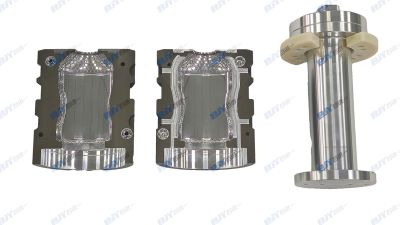
500ml PET Blowing Mold: Efficient Solutions for High-Quality Bottle Manufacturing

A 500ml PET blowing mold plays a decisive role in producing lightweight, durable, and visually consistent bottles at high speed. Its mold cavity directly influences the bottle’s dimensions, wall thickness, surface finish, and forming stability. For beverage manufacturers, a precisely engineered cavity helps maintain reliable production performance while reducing defects such as uneven stretching, deformation, and incomplete forming.

Custom-dimensioned PET mold cavities can be developed to match specific bottle designs and stretch-blow molding requirements. A 150 × 419.6 mm cavity format may be selected for certain 500ml applications, while other dimensions can be adjusted according to the bottle profile, neck finish, base structure, and equipment configuration. Careful engineering ensures that the preform expands evenly throughout the cavity, supporting accurate shape reproduction and consistent material distribution.

High-quality cavity construction also contributes to efficient cooling, smooth demolding, and extended mold service life. Optimized airflow and cooling-channel design help control cycle times during continuous production, while accurately machined surfaces support a clean, uniform bottle appearance. From initial dimensional planning to final machining and testing, each cavity can be tailored to deliver dependable performance for high-volume PET bottle manufacturing.

FAQS

What bottle sizes are these mold choices designed for?

They suit carbonated soft-drink bottles from 0.2 to 0.75 liters. A 330 ml bottle is a useful comparison point.

How does blow-and-blow molding work?

Compressed air forms the initial parison, then expands it inside the final mold. The process supports varied neck designs and stable production.

When is blow-and-blow a practical choice?

Choose it for mixed bottle formats or plants with changing temperatures. It often tolerates small process variations better. That matters.

What advantage does NNPB provide?

A plunger shapes the initial parison before final blowing. This can improve wall distribution and support lighter bottles. Less glass can reduce pallet weight.

Can NNPB reduce bottle weight?

Potential reductions may reach about 15–30%, depending on design and process control. Results vary. A lighter 330 ml bottle may lower transport costs.

Is NNPB always better than blow-and-blow?

Not automatically. NNPB needs careful control of cooling, gob weight, neck accuracy, and residual stress. Blow-and-blow may suit inconsistent plant conditions better.

What risks should buyers examine with lightweight bottles?

Check heel geometry, wall thickness, internal pressure, filling speed, and warehouse stacking. A 500 ml bottle may look perfect, then fail under pressure. Looks can mislead.

What testing should buyers request before approval?

Request dimensional records, trial samples, maintenance logs, and distribution tests. Include vibration, compression, impact, filling, and stacking conditions. Test realistic conditions.

Which quality and food-safety documents matter?

Review packaging distribution results, food-safety controls, migration reports, material declarations, and production-batch records. Check lubricant, cleaning, hygiene, and traceability procedures.

What should migration documentation confirm?

It should cover the intended beverage, temperature, and storage period. Requirements such as EU 10/2011 may apply to relevant food-contact materials. Missing records can delay approval.

Conclusion

This guide explains how to select the right Csd Bottle Mold for carbonated soft drink packaging in 2026. It compares PET, glass, and aluminum forming routes, with attention to PET ISBM molds for 3.0–3.5 CO₂ volumes and bottle formats from 0.2 to 2.0 liters. It also covers preform mold design, including 28–48 mm neck standards, hot-runner balance, temperature control, and reliable material distribution. For glass bottles, the discussion contrasts blow-and-blow and NNPB processes for 0.2–0.75 liter containers.

The article further evaluates production economics, from 24- to 144-cavity molds and line outputs of 10,000–80,000 BPH, while highlighting cooling efficiency, tool life, maintenance, and changeover time. Quality considerations include ASTM D4169 testing, ISO 22000 management principles, and EU 10/2011 requirements for applicable food-contact materials. A practical 2026 buyer matrix helps global purchasers compare total cost, production stability, customization flexibility, and long-term mold performance.
Liam

Liam

Liam is a dedicated marketing professional at Foshan Baijin Precision Technology Co., Ltd., where he leverages his extensive expertise to enhance the company’s online presence. With a deep understanding of the precision technology industry, he excels in crafting informative and engaging blog posts......
Previous 10 Best Blow Moulding Products for Global Buyers