Leave Your Message
*Name Cannot be empty!
* Enter product details such as size, color,materials etc. and other specific requirements to receive an accurate quote. Cannot be empty
0%

When you're choosing a Compression Cap Mould manufacturer, the decision really matters—it can affect how consistent your products are, how fast you can produce them, and what your operating costs look like down the road. A cap might seem simple, but those threads, sealing surfaces, and tamper-evident features? They all come down to precise mould design. If you pick the wrong supplier, you could end up with flash, uneven wall thickness, or caps that just won't fit right. And honestly, small defects are a much bigger deal than people think. Honestly, they can mess things up—one minute you're fine, and the next you're looking at rejected batches plus downtime that didn't have to happen.

Let’s be honest—a slick brochure can be impressive, but it doesn’t actually prove a manufacturer knows what they’re doing. You’ve gotta look past the shiny pages. Ask about their experience with cap designs similar to yours, what tooling materials they work with, how their machining capabilities stack up, and what kind of quality checks they run. Get them to give you numbers, too: cavity balance, how they measure dimensions, how often you should expect maintenance. And if you can, see actual sample parts being made under conditions that match real production—not just a showroom demo. Also, don’t forget to ask what happens after delivery: how do they handle revisions, Spare Parts, and technical support? It makes a huge difference. Honestly, clear answers just make you feel confident, you know? Vague promises? They don't really do that.

Let’s be honest—comparing manufacturers isn’t just about the price tag. This guide gets into practical ways to weigh your options, looking at things like design support, production capacity, communication, and service life—plus the questions you can actually verify with a supplier. No single vendor is going to be the right fit for every project. That rock-bottom quote? It might end up costing you in repairs or lost production down the line. And the premium choice isn’t always worth it either, especially if you only need a short run. Look, even the most careful review can only take you so far. A sample can't really show every little issue that might pop up months down the road. What you're really aiming for is a smarter decision—backed by evidence, realistic expectations, and actually talking things through with the manufacturer.

How to Choose the Right Compression Cap Mould Manufacturer

Define Compression Cap Mould Requirements: Resin, Closure Size, and Target Output

Before requesting a quote, define the resin, closure dimensions, and expected production volume. “Plastic” is not specific enough. A cap made from HDPE may behave differently from one made from PP, affecting shrinkage, cooling, and ejection. Share the resin grade if it is already selected, along with any additives that may change flow.

Measure the closure carefully. Include its outer diameter, height, thread profile, sealing surface, and any tamper-evident band. A small mismatch can cause leakage or make the cap difficult to apply. Send a dimensioned drawing and, when possible, a physical sample. I have seen specifications focus on the visible top while overlooking the liner or sealing face. That is easy to miss.

Set a realistic target output. State the required caps per hour or per year, planned operating hours, and acceptable scrap rate. These details help a manufacturer assess cavity count, cycle time, cooling, and machine compatibility. Ask how output estimates were calculated; a cycle-time figure alone does not tell the whole story. For a Cap Mould Compression Mold, confirm that the proposed design suits both the chosen resin and your actual press conditions. Leave room to review test samples. Initial assumptions are sometimes wrong.

How to Choose the Right Compression Cap Mould Manufacturer — Define Compression Cap Mould Requirements: Resin, Closure Size, and Target Output

Example Requirement Resin Closure Size and Design Illustrative Mould Setup Indicative Gross Output Details to Confirm with the Manufacturer
Small beverage closure Polypropylene (PP) Approximately 28 mm; confirm thread, tamper-evident band, and sealing features 24 cavities at an assumed 30–40 cycles per minute Approximately 43,200–57,600 caps per hour Confirm neck-finish compatibility, band geometry, resin grade, cooling requirements, and the intended production machine.
General-purpose medium closure High-density polyethylene (HDPE) Approximately 28–38 mm; specify closure height, thread, and sealing method 32 cavities at an assumed 30–40 cycles per minute Approximately 57,600–76,800 caps per hour Ask the supplier to validate material flow, shrinkage allowance, ejection, and cap fit using the selected resin grade.
Medium-to-large closure PP Approximately 38–50 mm; may include a dispensing or specialty feature 32 cavities at an assumed 25–35 cycles per minute Approximately 48,000–67,200 caps per hour Provide drawings or samples of the closure and container finish. Confirm feature complexity, dimensional tolerances, and inspection criteria.
High-volume standard closure PP Approximately 28–38 mm; repeatable, established closure design 48 cavities at an assumed 35–45 cycles per minute Approximately 100,800–129,600 caps per hour Check that the machine can support the mould’s cavity count, cycle requirements, cooling, and automated part handling.
Larger-diameter closure HDPE Approximately 38–55 mm; confirm wall thickness, thread profile, and seal design 48 cavities at an assumed 30–40 cycles per minute Approximately 86,400–115,200 caps per hour Review the available machine capacity and mould layout. Validate closure dimensions and performance with production trials.
Output figures are illustrative gross calculations: cavity count × cycles per minute × 60. They are not guaranteed production rates and exclude downtime, start-up, rejects, and other efficiency losses. Confirm the resin grade, closure drawing, machine specifications, required good-part output, and acceptance criteria before final mould design.

Verify Mould Design Against ISO 20457 Dimensional Tolerances

A compression cap drawing should state critical dimensions, measurement conditions, and the ISO 20457 tolerance class agreed with the manufacturer. The standard provides a framework for tolerances on plastic moulded parts; it does not set one universal fit tolerance for every cap. Check the skirt diameter, thread profile, sealing land, and tamper-band clearance against the actual resin and closure design. Small differences matter. Ask how the supplier measures parts after conditioning, not only straight from the mould. That detail is easy to miss.

The OECD’s Global Plastics Outlook reports that packaging accounted for 40% of plastic waste in 2019, a reminder that closure quality affects high-volume products. Review the mould drawing, resin shrinkage assumptions, and first-article measurements together. A shop-floor trial may reveal ovality or uneven sealing that CAD cannot show. One lesson from trials: a perfect model can still mislead. Ask for cavity-by-cavity inspection records and a clear plan for correcting out-of-tolerance results. The phrase “Compression Cap Mould Lower” should not distract from evidence: compare suppliers on verified dimensions, repeatability, and documented process controls, not price alone.

Compare Cavity Counts, Cycle-Time Data, and Annual Production Capacity

When comparing compression Cap Mould manufacturers, do not judge a mould by cavity count alone. More cavities can increase output, but only when cooling, ejection, and machine capacity support them. Ask for the proposed cavity layout and a recent production record for a similar cap. Numbers need context.

Request cycle-time data from a mould trial, not just a target quoted during sales discussions. Check the resin grade, cap weight, cooling conditions, and machine tonnage used in the test. A few seconds saved per cycle can matter across a full shift, but unstable cycles may create more rejected caps. Ask how cycle time changes after the mould warms up and runs continuously. Small details matter.

Annual production capacity should reflect realistic operating hours, planned maintenance, changeovers, and expected scrap. Ask the manufacturer to show the calculation behind its estimate, including shifts per day and working days per year. Then compare that figure with your demand and seasonal peaks. Ask for sample caps and inspect thread fit, sealing surfaces, flash, and consistency across cavities. A spreadsheet can look convincing; projections remain estimates until a representative run confirms them. I would also leave some room for uncertainty, since actual schedules are rarely perfect.

How to Choose the Right Compression Cap Mould Manufacturer

Compare cavity counts, cycle-time data, and estimated annual production capacity.

Higher cavity counts can increase output, but cycle time and actual operating efficiency also matter. Annual capacity here is an illustrative estimate calculated at 75% operating efficiency, 20 production hours per day, and 300 production days per year. Request validated cycle-time and production records for the specific mould and production line before comparing suppliers.

Assess Steel Grade, Heat Treatment, and Expected Mould-Life Evidence

When assessing an OEM Compression Cap Mould, ask which steel grade is used for the core, cavity, and wear-prone parts. The choice should match the resin, production volume, and expected maintenance schedule, not just a sales specification. Ask for the steel mill certificate and confirm that the grade matches the mould drawing. Small differences matter.

Heat treatment can affect hardness, wear resistance, and dimensional stability. Request the treatment record, hardness readings, and measurement locations. Readings from several cavity areas are more useful than one number on a certificate. Ask how the supplier checks distortion after treatment, especially around thin ribs and sealing surfaces. A clear answer builds confidence.

Mould-life claims need context. Ask for cycle-count records from comparable cap designs, plus maintenance logs and examples of rejected parts. Check whether the stated life assumes routine polishing, component replacement, or a specific resin and machine setup. Ask how cycle counts were verified. Evidence can still be imperfect: production conditions vary, and one successful trial is not a guarantee. Compare documented results with your own expected output before approving the design.

Audit Manufacturer Quality Systems, Including ISO 9001 Certification

When choosing a compression cap mould manufacturer, inspect its quality system rather than relying on a sales presentation. Ask for a current ISO 9001 certificate and verify its validity, issuing body, and stated scope. The scope should cover activities relevant to mould design or manufacture. Certification shows that documented processes are in place; it does not guarantee that every mould will meet your requirements.

Paperwork is only a start. During an audit, review how the manufacturer controls drawings, material certificates, and design changes. Ask to see inspection records for cavity dimensions and critical sealing features. Check whether measuring tools are calibrated and whether rejected parts are recorded, investigated, and corrected. A sound process leaves a traceable trail, from incoming steel to final mould inspection.

Walk the production floor, too. Look for clear job instructions, organized storage, and mould maintenance records. Ask how technicians respond when trial parts show uneven wall thickness or inconsistent cap fit. Their answer should include evidence, not just confidence. A clean workshop can still hide weak controls, and I would not treat a single successful sample as proof of long-term consistency. Request a sample quality report and discuss how the supplier will handle revisions after approval.

Review Sampling Reports, Cap Fit Tests, and Production Trial Results

A sample report should show more than a few attractive caps. Check cavity identification, resin grade, cap weight, dimensions, cycle time, and rejected parts. PlasticsEurope’s Plastics – the Fast Facts 2023 report says packaging represented 39.8% of European plastics applications in 2022. That scale makes repeatable mould output more important than a flawless sample from one cavity.

Fit testing needs recorded results, not “fits well.” Ask for application and removal torque, thread engagement, leakage checks, and results across several bottle-neck samples. ASTM D2063/D2063M provides a method for measuring torque retention in threaded closures. Compare test conditions with your filling and handling process. A dry bench test alone may miss problems after transport or temperature changes.

Production trials reveal what samples cannot. Request trial data using the intended resin, target cycle time, and every mould cavity. Review weight and dimension variation, flash, short shots, and stoppages. A perfect first sample proves little. If a report omits failed runs or test conditions, ask why; even a good supplier’s paperwork can be incomplete. Tie acceptance limits to your own line, and retain trial samples for comparison after production begins.

Compare Total Cost, Lead Time, Warranty, and After-Sales Support

A low quotation does not always mean a low-cost compression cap mould. Compare the full package: mould price, sampling, spare parts, shipping, and any changes needed after trial runs. Ask for an itemized quote. It makes hidden costs easier to spot. For an ODM Compression Cap Mould, confirm which cap dimensions, resin type, and production volume the price covers. A quote based on different assumptions can look attractive and still miss the mark.

Lead time should include design approval, machining, testing, and sample revisions—not just the stated build period. Request a milestone schedule with dates and clear approval points. Check how the supplier handles delays or a sample that needs adjustment. A few days saved on paper may not help if production starts with an unverified mould. Ask for recent, relevant project examples, while remembering that another project’s timing may not match yours.

Read the warranty terms closely. Check what counts as a defect, how long coverage lasts, and who pays for shipping or repairs. Ask what happens if cavities show uneven wear or caps vary in fit. After-sales support matters when a line is waiting: confirm response times, access to replacement components, and whether troubleshooting is remote or on-site. I would not assume a generous warranty guarantees fast help. That detail is easy to overlook.

300ml Blow Mould for Aseptic Packaging: Precision Design, Efficiency, and Product Quality

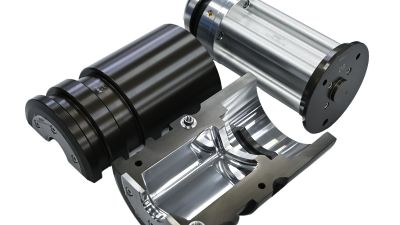
Designed for high-speed rotary blow molding, this 300 ml mould helps produce PET bottles with consistent dimensions for aseptic packaging lines. Its Ø135 × 363 mm size supports a precise fit, while the mould cavity shapes heated preforms into finished bottles with repeatable form. Stable dimensional control can help maintain a uniform appearance across production runs and support reliable downstream filling and packaging.

Made from imported aluminum, the mould transfers heat quickly, helping the forming process run efficiently during extended production. Its construction is intended to provide dependable performance under continuous operating conditions, with precision design supporting both bottle quality and production consistency. The mould is compatible with the specified blow molding equipment and can be installed directly without structural modification, helping simplify setup and reduce installation work.

FAQS

Which steel details should I check before approving a mould?

Ask for the steel grade used in the core, cavity, and wear-prone parts. Compare the mill certificate with the mould drawing. Small differences matter.

What heat-treatment records are useful?

Request treatment records and hardness readings from several cavity areas. Ask how distortion is checked near thin ribs and sealing surfaces. One reading is not enough.

How can I judge a mould-life claim?

Request cycle-count records, maintenance logs, and examples of rejected parts from comparable cap designs. Check whether the estimate assumes polishing or component replacement. A trial is not a guarantee.

What assumptions should a mould quotation state?

Confirm the cap dimensions, resin type, and production volume covered by the price. Ask for itemized costs for sampling, spare parts, shipping, and trial changes. Hidden costs add up.

What should a realistic lead-time schedule include?

It should cover design approval, machining, testing, and sample revisions. Request dated milestones and approval points. A few days saved on paper may mean little.

What warranty details should I review?

Check the coverage period, what counts as a defect, and who pays for shipping or repairs. Ask how uneven cavity wear or inconsistent cap fit is handled.

How should after-sales support be assessed?

Confirm response times, replacement-part access, and whether troubleshooting is remote or on-site. A production line waiting for help can make delays feel much longer.

Do records from another project prove the mould will perform the same way?

No. Resin, machine setup, and production conditions can differ. Compare the evidence with your expected output. Some uncertainty remains.

Conclusion

Choosing the right Compression Cap Mould manufacturer starts with clearly defining your production requirements. Specify the resin, closure dimensions, target output, and expected annual volume. Then check that the proposed mould design meets relevant ISO 20457 dimensional tolerances and that cavity count and cycle-time data can support your production goals. Ask for evidence of the mould steel grade, heat treatment process, and expected service life rather than relying on general claims.

Evaluate the manufacturer’s quality system, including any ISO 9001 certification, and request practical evidence such as sampling reports, cap fit-test results, and production trial records. Finally, compare the full cost alongside lead time, warranty terms, and after-sales support. Considering these factors together helps you assess whether a supplier can deliver consistent cap quality, dependable output, and reliable assistance throughout the mould’s working life.


Liam

Liam

Liam is a dedicated marketing professional at Foshan Baijin Precision Technology Co., Ltd., where he leverages his extensive expertise to enhance the company’s online presence. With a deep understanding of the precision technology industry, he excels in crafting informative and engaging blog posts......
Previous 2026 Best CSD Bottle Mold Types for Global Buyers?