Leave Your Message
*Name Cannot be empty!
* Enter product details such as size, color,materials etc. and other specific requirements to receive an accurate quote. Cannot be empty
0%

Picking the right Pet Preforms Mould? That's not just a purchasing call—it’s a production decision. The mould shapes things like Preform weight, neck accuracy, cycle time, energy use, and rejection rates. And honestly, one small design slip can turn into thousands of bad bottles.

John Galt, former President and CEO of Husky Injection Molding Systems, put it well: “The mould is the heart of the injection molding system.” Still true today. Your mould has to line up with the resin grade, preform geometry, injection machine, and the output you expect. It also needs to keep cooling stable and filling balanced across every cavity.

This is where experience really counts. Plant engineers usually look at gate quality, cavity alignment, steel durability, and how easy maintenance access is before they sign off on a design. They’ll also check whether replacement parts are actually available. That’s one of those details that’s easy to skip—until it stops production later.

A dependable Pet Preforms Mould should give you consistent wall thickness and repeatable cycle performance. Hot runner control? Pay close attention. Cooling channels? Even more. Bad cooling can lead to stress, haze, warpage, and uneven shrinkage.

The cheapest option might not be the most economical. But expensive gear isn’t automatically better either. That’s why buyers need honest comparisons, not just shiny brochures. Moldflow analysis, factory trials, sample testing, and supplier references can help cut down the uncertainty. Still, no selection is ever perfect. Material changes, operator habits, and machine condition can all affect the results.

This guide walks through how to compare mould construction, cavity numbers, steel grades, tolerances, cooling design, and supplier support. It keeps the focus on measurable performance. It also challenges assumptions that often seem reasonable at first.
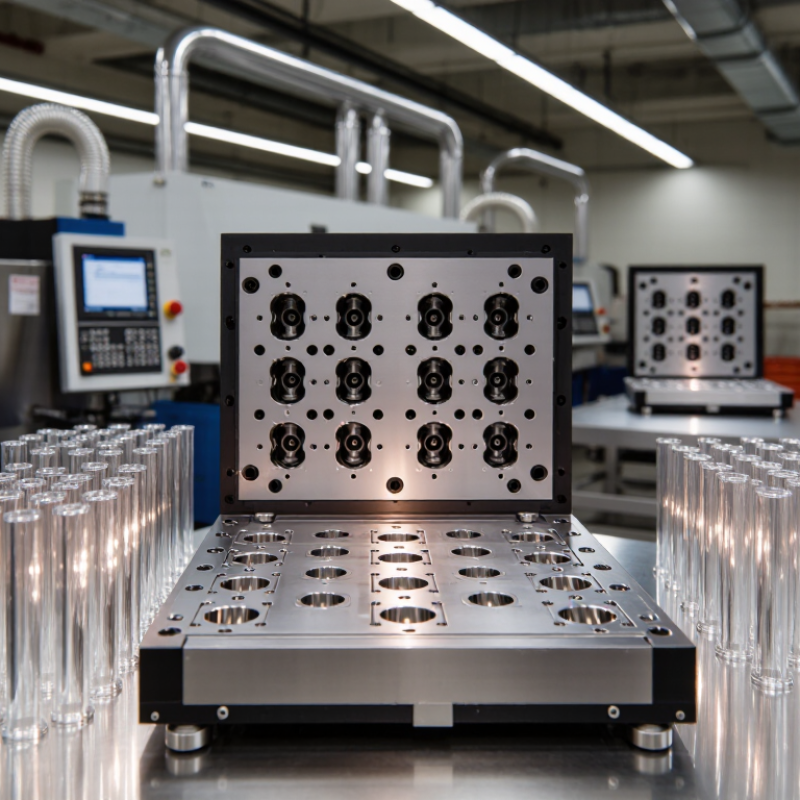
How to Choose the Right PET Preform Mould?

Understanding PET Preform Moulds and Their Main Applications

PET preform moulds shape the small, thick tubes later blown into bottles and containers. Their design controls material distribution, clarity, weight, and production stability. A mould with accurate cavities produces consistent preforms, while poor cooling can create cloudy areas or uneven walls.

Different applications require different preform features. Drinking-water bottles often need lightweight bodies and reliable neck dimensions. Cooking-oil containers may require stronger walls and greater stiffness. Cosmetic and household packages can demand a better surface finish. Medical packaging requires careful control of cleanliness and dimensional accuracy. The selected resin, bottle volume, neck finish, and blowing process must match the mould design.

In practical trials, engineers check cycle time, cooling balance, ejection marks, and flash around the gate. These details matter on a busy production floor. A mould may perform well during a short test but become unstable after hours of operation. That weakness is easy to overlook.

An OEM Pet Preforms Mouldcan be developed around a specific preform structure, cavity quantity, and machine specification. Important choices include steel quality, hot runner control, cavity alignment, and replaceable wear parts. Food-contact applications also require suitable materials and documented process controls. More cavities can increase output, but they also demand stronger temperature balance and maintenance discipline. Bigger is not always better. The right mould supports stable production, practical servicing, and repeatable bottle performance.

Defining Product Requirements Before Selecting a Mould

How to Choose the Right PET Preform Mould?

Defining Product Requirements Before Selecting a Mould

Choosing a PET preform mould should begin with the container, not the mould catalogue. Define the bottle volume, neck finish, weight, and intended application. A lightweight water bottle needs different support from a thick-walled container for edible oil or household products. Small details matter. The required stretch ratio affects material distribution during blowing. So does the preform’s length and wall thickness.

Review the production environment with equal care. Confirm the target cycle time, cavity quantity, injection machine capacity, and cooling-water conditions. Resin characteristics also deserve attention, especially intrinsic viscosity and drying requirements. During mould assessments, I check whether the hot runner can maintain stable temperatures across every cavity. Uneven heating may create colour variation, weak areas, or inconsistent preform weights. These problems often appear after installation, when adjustments become expensive.

Inspection requirements should be defined before technical discussions begin. Set acceptable limits for weight variation, gate quality, neck dimensions, and visible defects. Ask how cavity balance will be measured, not only how it will be promised. A mould may perform well during a short trial but behave differently during continuous production. That risk is easy to underestimate. Maintenance access, spare-part availability, and cleaning procedures should also be documented. I have seen teams focus heavily on initial price and overlook downtime costs. That choice can be difficult to reverse. A practical specification, tested with real resin and realistic production conditions, gives the mould designer a much clearer target.

How to Choose the Right PET Preform Mould?

Defining the product requirements before selecting a mould is essential. Bottle capacity, preform weight, neck finish, wall distribution and cavity count all affect mould design and production performance.

Preform mass generally increases with bottle capacity because larger bottles require more PET material for strength and stretch distribution. The values shown are common industry reference targets; the final mould specification should be confirmed through bottle design, resin selection, pressure testing and production trials.

Comparing Mould Materials, Cavities, and Design Features

Choosing the right PET preform mould starts with the material, not the catalogue photograph. Experienced mould engineers compare hardened steel, corrosion resistance, thermal conductivity, and expected production cycles. Premium steel can support long runs, but it may increase machining costs. Stainless options resist moisture better in humid factories. Small cooling channels also need stable dimensions. Test data matters.

Cavity quantity directly affects output, balance, and maintenance time. A high-cavity mould can produce more preforms per cycle. However, uneven filling may create different weights or wall thicknesses. I have seen operators spend hours correcting a problem caused by poor cavity balancing. A lower-cavity mould can be easier to monitor during early production. It is not always the cheaper choice.

Design features deserve close inspection. Check the gate area, neck finish, cooling layout, hot runner control, and ease of part removal. A well-designed mould should allow quick cleaning around narrow channels. For an ODM Pet Preforms Mould, engineers should match cavity design with the resin, bottle size, and machine capacity. Tiny alignment errors can leave visible marks on transparent preforms. These details are easy to overlook. I would also request trial samples, dimensional reports, and cycle-time records before approval. A mould that looks efficient on paper may behave differently after continuous operation.

Evaluating Machine Compatibility and Production Capacity

How to Choose the Right PET Preform Mould?

Evaluating Machine Compatibility and Production Capacity

A mould may fit the product drawing but still fail on the selected machine. Check platen dimensions, tie-bar spacing, mould height, and maximum opening stroke. Confirm the injection unit can deliver enough material for the planned preform weight and shot size. The mould must also match the machine’s neck-finish requirements. Small mismatches create flash, poor alignment, or difficult demoulding. Ask for complete machine and mould drawings. This step prevents expensive surprises.

Production capacity begins with actual demand, not the highest advertised cycle rate. Calculate output using cavity number, cycle time, and expected machine availability. A 48-cavity mould running at a 12-second cycle can produce 14,400 preforms per hour. That figure assumes stable cooling, consistent resin, and minimal stoppages. Real production is less perfect. Check cooling performance carefully, especially around the gate and neck areas. Uneven cooling can lengthen cycles and increase rejection rates.

Leave room for future volume, but avoid buying excessive cavities too early. A larger mould may require more injection pressure, cooling capacity, and maintenance labor. Review the machine’s historical reject rate instead of relying only on specifications. Even a two-percent rejection rate can reduce useful output significantly. Plan access for cleaning and inspection. Spare inserts matter. Some estimates remain uncertain. A short production trial can reveal filling imbalance, cycle variation, and operator difficulties before the mould enters regular production.

Checking Quality, Precision, Cooling, and Maintenance Requirements

Choosing a China Pet Preforms Mould requires more than comparing cavity numbers and purchase prices. Check the steel certificate, cavity polish, gate alignment, and hardness records. ISO 20457 provides a useful framework for moulded-part tolerances and inspection. However, a certificate does not prove stable production. Measure preform weight and wall thickness across several cavities. Small differences often reveal poor balancing.

Cooling deserves equal attention. Inspect water-channel layout, flow direction, pressure loss, and temperature control near the neck and gate. A practical test uses clear water, calibrated gauges, and thermal readings after the mould reaches production speed. Uneven cooling can create cloudy sections, warpage, or difficult demoulding. NAPCOR’s 2022 PET Recycling Report recorded a 29.6% PET bottle recycling rate in the United States. That figure makes unnecessary scrap harder to ignore.

Maintenance requirements should be written before the order is placed. Ask for cleaning procedures, spare-part drawings, lubrication points, and recommended inspection cycles. Confirm whether technicians can replace gate inserts without removing the entire mould. That detail saves real downtime. Keep cavity records, cycle counts, and defect photographs together. I would also question any supplier promising zero maintenance. It sounds attractive, but it is not realistic. Even a precise mould needs regular vent cleaning, water-channel checks, and wear measurement. A good selection leaves room for inspection, correction, and honest review.

Assessing Supplier Reliability, Costs, and Long-Term Value

Choosing a PET preform mould requires more than comparing Pet Preforms Mould Quotes. Supplier reliability often determines the real cost. Ask for cavity trials, steel certificates, dimensional records, and spare-part lead times. A dependable supplier shares process data before requesting a purchase order. That matters when one damaged cavity can reduce output across an entire shift.

The PlasticsEurope 2023 report recorded 400.3 million tonnes of global plastics production in 2022. This scale increases pressure on manufacturers to reduce waste and maintain stable production. The OECD Global Plastics Outlook reported that only 9% of plastic waste was recycled in 2019. Therefore, mould design should support consistent wall thickness, lower scrap, and efficient material use. Hot-runner balance, cooling-channel layout, and cycle stability deserve careful inspection. A cheaper mould may hide higher maintenance costs. I have seen quotations omit polishing, testing, packaging, or engineering changes. That is not always deliberate, but buyers must check.

Tips: Compare total ownership cost, not only the initial quotation. Request a sample production run with measured preforms. Confirm warranty limits, response times, and local technical support. Keep replacement inserts available. Small delays become expensive quickly. Also, ask for references from similar cavity counts and bottle weights. Supplier claims are useful, but documented production evidence is stronger. One uncomfortable question remains: can the supplier still support this mould after the original project team changes?

How to Choose the Right PET Preform Mould? - Assessing Supplier Reliability, Costs, and Long-Term Value

Use the following benchmark table to compare PET preform mould proposals. The figures are practical industry reference ranges and should be confirmed against the required preform design, resin, machine, cavity count, and production volume.

1. Supplier Evaluation and Reliability Criteria

Weighted procurement criteria for PET preform mould selection
Evaluation Dimension Weight Preferred Benchmark Acceptable Range Verification Method Long-Term Impact
Relevant PET preform mould experience 15% Documented experience with the required preform neck finish, weight, cavity count, and resin grade At least 3 comparable reference projects with measurable production results Review anonymized case records, sample parts, process data, and customer references Reduces design errors, commissioning delays, and repeated mould modifications
Dimensional accuracy and repeatability 15% Stable preform weight, wall thickness, neck dimensions, and gate geometry within agreed tolerances Supplier provides a documented inspection plan and capability data for critical dimensions Request dimensional reports from trial samples and confirm measurement equipment calibration Improves bottle blowing stability and reduces rejects during high-speed production
Delivery reliability 10% Firm schedule with design review, steel release, trial, correction, and final acceptance milestones Typical complete delivery target: approximately 8–16 weeks, depending on complexity Check milestone dates, progress reporting, escalation procedures, and liquidated-damages terms Protects launch schedules and reduces the cost of idle downstream equipment
Technical communication 10% Fast response, clear drawings, controlled revision history, and bilingual technical documentation where needed Questions answered within 1–2 business days during engineering and trial stages Run a design-review exercise before placing the purchase order Prevents specification gaps and shortens troubleshooting cycles
After-sales service 10% Structured support for installation, mould trials, process setup, spare parts, and corrective actions Remote support available during working hours with defined emergency response coverage Review service-level commitments, support channels, spare-part lead times, and warranty exclusions Limits downtime and improves the useful life of the mould
Maintenance design 10% Replaceable wear components, accessible cooling circuits, clear maintenance instructions, and traceable spare parts Routine inspection points and replacement procedures are documented before acceptance Inspect maintenance drawings, recommended spare lists, and access to cavity, core, and hot-runner components Reduces maintenance labour, changeover time, and unplanned stoppages
Material and surface treatment 10% Corrosion-resistant mould steel and surface treatment appropriate for PET processing and cooling-water conditions Material certificates and treatment records supplied for critical components Verify steel grade, hardness, coating or treatment specification, and certificate traceability Improves resistance to corrosion, wear, scratching, and dimensional drift
Trial and acceptance procedure 10% Acceptance based on agreed cycle time, output, part quality, dimensional limits, and defect rate At least one documented mould trial with signed sample approval Define FAT/SAT criteria before manufacture and record results against the same criteria Prevents disputes and ensures that the mould performs in the intended production environment
Financial and commercial stability 10% Transparent quotation, stable payment terms, clear warranty, and predictable spare-part pricing All exclusions, taxes, tooling changes, transport, and commissioning costs are itemized Request a total-cost quotation and review contract terms before technical approval Reduces unexpected expenditure and supply risk over the mould's service life

2. Typical Cost Structure for a PET Preform Mould

Budget categories that should be included in a total-cost comparison
Cost Category Typical Cost Pattern What Should Be Included Common Omission Risk Cost-Control Action
Initial mould purchase price Usually the largest upfront cost; increases with cavity count, hot-runner complexity, precision, and automation requirements Mould base, cavities, cores, inserts, hot runner, cooling system, standard accessories, and documentation Low quotation excludes hot-runner components, trial corrections, or required machine interfaces Request a line-item quotation and compare identical technical specifications
Engineering and design Normally included in a complete mould quotation, but design changes may be charged separately Preform design review, mould-flow review where applicable, 2D drawings, 3D data, and revision control Late changes to neck finish, gate, wall thickness, or cavity layout create extra charges Freeze the product specification before steel cutting
Sampling and mould trials May include one or more trial runs; additional trials can add transport, machine, labour, and correction costs Trial material, machine time, sample inspection, process records, and correction rounds Acceptance is based only on visual samples without production-speed testing Specify the number of included trials and measurable acceptance criteria
Installation and commissioning Depends on site distance, machine type, technician travel, and required process support Installation supervision, machine matching, process setup, operator training, and commissioning report Remote support is assumed to be sufficient when on-site adjustment is required Clarify travel costs, working days, and deliverables before purchase
Recommended spare parts Should be budgeted separately for high-wear or production-critical parts Seals, gate components, cooling fittings, valve components, inserts, sensors, and selected hot-runner spares Low initial price but long lead times or high replacement prices later Obtain a 12–24 month spare-parts list with unit prices and lead times
Maintenance and refurbishment Recurring cost that rises with cycle count, contamination, cooling-water quality, and maintenance discipline Cleaning, inspection, polishing, seal replacement, dimensional checks, and refurbishment of worn components Maintenance labour and planned downtime are ignored in the purchase decision Compare maintenance intervals, access requirements, and replacement procedures
Production downtime Potentially the most expensive cost when an unreliable mould causes extended stoppages Lost output, labour, machine utilization, delayed shipments, and emergency logistics Purchase price is optimized while reliability and spare availability are neglected Calculate downtime exposure using the actual hourly contribution margin of the line

3. Technical and Operational Benchmark Ranges

Reference ranges for preliminary comparison; final values must match the approved product and machine specification
Technical Parameter Practical Reference Range Why It Matters Questions to Ask the Supplier Warning Sign
Cavity configuration Common configurations include 16, 32, 48, 64, 72, 96, and 144 cavities Determines output, mould balance, machine compatibility, and maintenance complexity Is the cavity count compatible with the injection machine, robot, and downstream blowing line? Proposed cavity count does not match machine platen size, injection capacity, or cooling capacity
Injection cycle time Often approximately 10–25 seconds, depending on preform weight, cooling demand, resin, and machine design Directly affects hourly output and energy consumption What cycle time was achieved at the specified preform weight and production conditions? Cycle-time claim is provided without test conditions or sample approval
Preform weight consistency Should be controlled within the tolerance agreed for the product and process capability Weight variation changes bottle performance, material cost, and blow-moulding stability What are the measured average, range, and capability results from the trial? Only average weight is reported; cavity-to-cavity variation is not shown
Cooling circuit quality Balanced circuits with accessible connections, leak testing, and documented flow paths Uneven cooling can cause warpage, stress, cycle-time loss, and dimensional variation Are cooling circuits individually identified and tested for leaks and flow? Cooling paths are undocumented or cannot be cleaned and inspected easily
Hot-runner temperature control Independent and stable control for relevant zones, with alarms and sensor traceability Supports balanced filling, consistent gate quality, and reduced start-up waste How many temperature zones are used, and what alarm and replacement procedures are provided? One control setting is used for a complex multi-zone system without documented validation
Gate and vestige quality Gate appearance and residual vestige must meet the approved preform drawing and bottle-blowing requirements Excessive vestige can affect handling, bottle appearance, and downstream performance What gate dimensions and inspection limits are included in the acceptance plan? Gate quality is judged only by photographs rather than approved physical samples
Maintenance accessibility Critical wear parts should be replaceable without unnecessary disassembly of the complete mould Shortens planned maintenance and reduces the risk of assembly errors Which parts are considered wear items, and how long does standard replacement take? Routine maintenance requires specialized work that is not documented or supported
Documentation package Complete package should include drawings, parts list, manuals, inspection records, certificates, and settings Supports future maintenance, troubleshooting, resale, and technology transfer Will editable drawings and complete spare-part identification be provided at final acceptance? Only a basic operating manual is supplied

4. Five-Year Total-Value Comparison Framework

Recommended calculation model for comparing competing mould proposals
Value Element Calculation Basis Recommended Data Source Interpretation
Initial acquisition cost Mould price + engineering changes + transport + installation + commissioning Signed supplier quotation and purchase contract Useful for budget control but should not be used as the only selection criterion
Annual maintenance cost Planned service labour + spare parts + refurbishment + inspection costs Supplier maintenance schedule and historical internal maintenance records Lower maintenance cost is valuable only if quality and uptime remain stable
Annual downtime cost Unplanned downtime hours × hourly production contribution margin Production records, machine utilization data, and finance-approved margin figures A reliable mould can justify a higher purchase price when downtime exposure is significant
Material-loss cost Reject kilograms × resin cost per kilogram + disposal or reprocessing cost Quality reports, scrap records, and current resin purchase prices Stable filling and cooling reduce waste and improve effective material yield
Energy-related cost Additional cycle time or heating demand × operating hours × site energy rate Machine energy measurements under comparable production conditions Small cycle-time differences can become financially important at high annual volumes
Output value Accepted preforms per hour × annual operating hours × contribution margin per accepted preform Validated trial output and approved financial assumptions Higher output is valuable only when dimensional quality and customer demand are maintained
Five-year total cost of ownership Acquisition cost + five years of maintenance, downtime, scrap, energy, and logistics costs Supplier quotation combined with internal operating data Provides a more reliable comparison than purchase price alone
Residual and transfer value Expected useful life, availability of spare parts, documentation quality, and compatibility with future equipment Technical assessment and asset-management policy Well-documented, maintainable tooling generally carries lower lifecycle risk
Decision rule: Select the mould with the best verified five-year value and risk-adjusted performance, not necessarily the lowest initial quotation. Require comparable trial conditions, measurable acceptance criteria, complete documentation, and a written after-sales commitment before final approval.

FAQS

What does a PET preform mould produce?

It forms small, thick tubes that later become bottles through a blowing process. The preform controls wall thickness, clarity, and bottle weight.

How should I choose a PET preform mould?

Start with the container requirements. Define bottle volume, neck finish, weight, resin, and intended use before selecting mould details.

Do different products need different preform designs?

Yes. Water bottles may need lightweight walls, while cooking-oil containers often require greater stiffness and strength.

Why is cooling balance important?

Uneven cooling can create cloudy areas, irregular walls, and unstable dimensions. These defects may appear after hours, not minutes.

What should engineers check during a mould trial?

Check cycle time, cavity balance, cooling performance, ejection marks, gate flash, and preform weight variation. Short trials can mislead.

Does a higher cavity count always improve production?

No. More cavities can raise output, but they require stronger temperature control and stricter maintenance. Bigger is not always better.

How does resin affect mould selection?

Resin characteristics, including intrinsic viscosity and drying needs, influence processing stability. The mould and resin must work together.

What maintenance details should be planned?

Document cleaning steps, spare parts, wear components, and maintenance access. A low initial price may hide costly downtime later.

Conclusion

Choosing the right Pet Preforms Mould begins with understanding its applications, such as producing containers for beverages, food, household products, and other safe packaging uses. Before making a decision, define the required preform shape, neck finish, weight, material, output volume, and product quality standards. These details help determine the most suitable mould structure and configuration.

Important factors include mould material, cavity number, precision, cooling efficiency, and ease of maintenance. The mould must also match the injection machine’s dimensions, pressure, and production capacity to ensure stable operation and consistent results. In addition to the initial price, evaluate the supplier’s manufacturing experience, technical support, spare parts availability, delivery reliability, and quality control. A well-designed mould may reduce cycle times, material waste, downtime, and maintenance costs, delivering better long-term value and supporting efficient, dependable production.


Liam

Liam

Liam is a dedicated marketing professional at Foshan Baijin Precision Technology Co., Ltd., where he leverages his extensive expertise to enhance the company’s online presence. With a deep understanding of the precision technology industry, he excels in crafting informative and engaging blog posts......
Previous Top CSD Bottle Mold Manufacturer in China for Global Buyers