Picking the right Blow Moulding Products isn’t just about comparing prices on some supplier’s website. Honestly, global buyers really need to dig a bit deeper — things like material quality, how consistent the production is, compliance records, and after-sales support all come into play. Having clear specs upfront can save your team from those painfully expensive surprises later on.
In this guide, I’ll walk you through common options like Pet Bottles, HDPE containers, PP jars, jerrycans, drums, and industrial tanks — each one is suited for different needs. For example, a transparent PET bottle is perfect for beverages, but if you’re dealing with detergents or agricultural liquids, a thicker HDPE container might be a better fit. Do pay attention to wall thickness, though. Walls that aren’t evenly thick can cause weak spots, leaks, or even make stacking during transportation a headache.
Most experienced buyers will ask for samples before placing a big order. They’ll compare things like weight, neck size, how well the cap fits, drop resistance, and the surface finish. Plus, they always confirm whether the supplier can provide those batch records, material certificates, and any relevant Food-contact or packaging certifications. Keep in mind, different markets have different standards — so one certificate might not satisfy them all.
Then there’s the equipment side of things. It's good to check the manufacturer’s cycle times, mold compatibility, cavity design, and their quality control process. Trustworthy factories should be able to tell you how they handle issues like flash, deformation, color consistency, and dimensional accuracy. Doing factory audits or bringing in third-party inspectors can really help, especially if you’re working with someone for the first time.
But, honestly, no supplier checklist is ever perfect. A factory with the latest machinery might be slow at answering your questions, or they might give you the lowest quote but with weaker documentation. In the end, you’ve got to weigh costs against performance, risks, and the level of ongoing support. The cheapest option isn’t always the best in the long run — what really counts is how reliably the product performs once it’s out of the factory and in your hands.
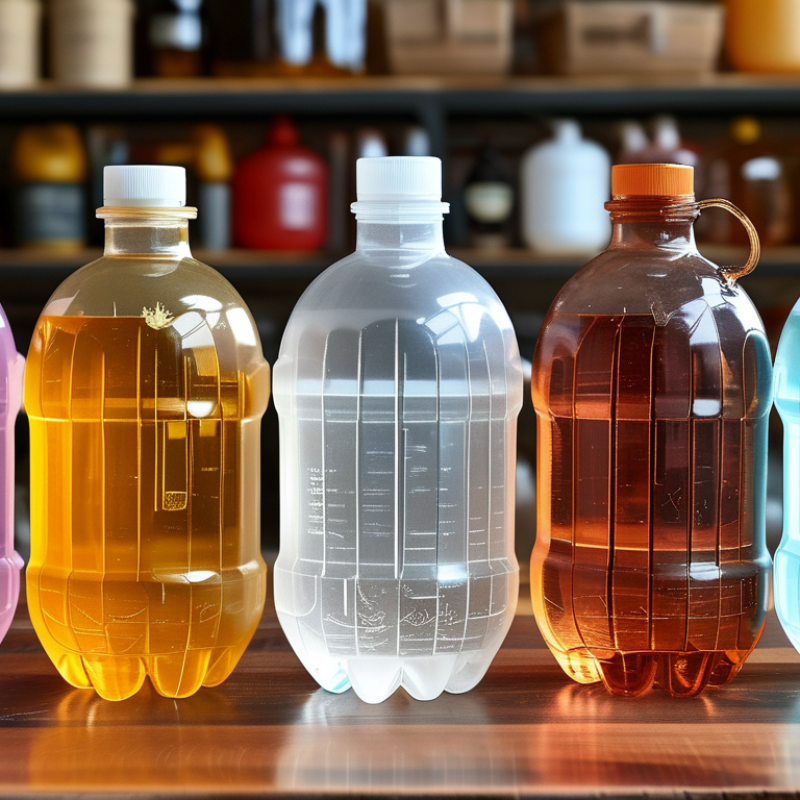
Blow moulding Explained: Three Core Processes and Product Categories
Blow moulding creates hollow plastic products by expanding heated material inside a mould. The right process depends on shape, volume, strength, and surface quality. Extrusion blow moulding forms a soft tube, called a parison, before compressed air expands it. This method suits bottles, drums, ducts, and industrial containers with changing wall thickness. It is practical for larger products and steady production runs.
Injection blow moulding first creates a precise preform around a moulded neck. The preform then moves into a blowing mould. This process supports small bottles, cosmetic containers, and healthcare packaging where clean details matter. Stretch blow moulding reheats a preform and stretches it lengthwise and sideways. The result is often a clear, lightweight bottle with improved strength. Product categories include household packaging, food containers, personal care packs, and technical parts.
Reliable production requires more than choosing a machine. Operators should check wall thickness, neck dimensions, sealing performance, and leakage after cooling. Small temperature changes can leave thin corners or cloudy surfaces. ODM Blow Moulding Products may need different tooling for regional sizes and transport conditions. In practice, no process is flawless. I have seen attractive samples fail after repeated drops. That lesson remains important: test the finished product, not only the moulded appearance. Traceable material records and consistent inspection also help buyers compare suppliers with greater confidence.
Blow moulding is commonly used for hollow plastic products. Extrusion blow moulding supports larger and more complex containers, injection blow moulding is suited to small precision bottles, and injection stretch blow moulding is widely used for lightweight PET packaging.
How to read the chart: The ranges are representative commercial capacity ranges and may vary by machine design, mould configuration, polymer, and product geometry. Common products include bottles, jerrycans, drums, medical containers, cosmetic packaging, and PET beverage bottles.
Packaging remains the strongest market for blow moulding products. Plastics Europe reported that packaging represented 40.5% of European plastics demand in 2022. This share explains the steady need for bottles, jerrycans, drums, and lightweight containers. Buyers usually assess leakage resistance, wall thickness, drop performance, and filling-line compatibility before price.
The Plastics Europe Plastics—The Fast Facts 2023 report also recorded 58.8 million tonnes of post-consumer plastic waste in Europe during 2022. Recycling pressure is therefore changing product specifications. Recycled content, mono-material designs, and thinner walls now influence procurement decisions. HDPE and PET containers remain practical for household, industrial, personal-care, and food-related packaging.
A lower resin weight can reduce cost and emissions, but it may weaken handles or shoulder areas. This is where technical testing becomes essential. Buyers should request migration information, recycled-content evidence, dimensional reports, and batch traceability. The OECD Global Plastics Outlook also identifies packaging as a major source of plastic waste, so durability deserves equal attention.
One difficult reality remains. A container may be recyclable in theory, yet unsuitable for local collection systems. Global buyers should compare resin availability, closure standards, transport conditions, and end-of-life infrastructure in each target market. Report figures guide decisions, but factory trials reveal problems that spreadsheets often miss.
Top Blow Moulding Products for Global Buyers?
PET bottles remain a practical choice for high-volume beverage packaging. Their low weight reduces transport demands, while strong clarity helps consumers inspect the drink. In a busy filling plant, bottles may move through rinsing, filling, capping, and labeling within seconds. Small neck variations can still cause jams, so dimensional checks matter.
Experienced buyers should review bottle weight, preform quality, pressure resistance, and storage performance. A 500-milliliter bottle may look simple, yet its base design affects stability on fast conveyor lines.
OEM Blow Moulding Products should also match the buyer’s filling equipment, closure system, and distribution climate. Hot warehouses expose weak designs quickly. Testing should include drop impact, top-load strength, leakage, and temperature changes.
Recyclability needs attention from the first design discussion.
Clear PET is commonly easier to sort and process than heavily colored material. Compatible labels, removable sleeves, and suitable closures can support recycling operations. Recycled PET may reduce reliance on new resin, but quality, food-contact requirements, and local regulations must be verified. Claims should be supported by supplier documents and independent test results.
Practical experience also reveals uncomfortable gaps. A bottle can pass factory testing but deform during long transport. A recyclable design may still be rejected when labels or additives confuse sorting equipment.
Buyers should inspect samples, review production records, and request pilot runs before placing large orders. Details often decide performance.
HDPE containers remain a practical choice for global buyers seeking strength without excessive weight. Their impact resistance helps protect liquids during warehouse handling, pallet movement, and long-distance shipping. A one-litre bottle may survive a short drop, but performance depends on wall thickness, shape, and closure design. Small details matter.
For chemical products, manufacturers should check HDPE compatibility with the exact formula, concentration, temperature, and storage period. A container that performs well with detergent may react poorly to another formulation. Testing should include leakage checks, drop trials, seal evaluation, and long-term storage observation. Do not rely on appearance alone. A smooth bottle can still fail under pressure.
Food and household goods require clean production controls, suitable materials, and carefully selected closures. Food-contact applications also need documentation that matches the destination market’s requirements. Handles, wide mouths, measuring caps, and ergonomic grips can improve daily use. Recycled content may support sustainability goals, but it can affect color, odor, and consistency. This deserves honest review. Even experienced buyers can overlook label adhesion after condensation, or discover panel distortion during filling. Pilot production is often wiser than ordering large volumes immediately. With clear specifications, batch records, and practical testing, HDPE packs can offer reliable protection across varied supply chains.
Top Blow Moulding Products for Global Buyers?
Industrial drums and tanks for dangerous goods require more than thick walls and clean moulding. A UN packaging code confirms that a specific design passed required performance tests. China Blow Moulding Products may include plastic drums, jerricans, and larger containers for regulated transport. Buyers should match the container with the substance, filling method, closure, and transport conditions.
A marking such as UN 1H1/Y1.6/200/26/CN/XXXX carries practical information. “1H1” identifies a plastic drum with a non-removable head. “Y” indicates a packaging performance level for certain hazard groups. The number can show relative density or gross mass, depending on the packaging type. Test pressure, production year, country code, and manufacturer identification may also appear. Small details matter.
A reliable supplier should provide the UN certificate, test report, material specification, and approved closure details. Ask whether the certificate covers the exact capacity and design, not only a similar container. Drop tests, stacking tests, leak tests, and pressure checks should reflect real handling conditions. A drum that survives a laboratory drop may still fail after sunlight exposure or repeated closure changes. That risk deserves honest review. Do not modify the container, gasket, or vent system without confirming certification impact. Local transport rules can add requirements beyond the UN marking. Consult a qualified dangerous-goods specialist before shipment.
support many hidden automotive systems. Air ducts guide clean, measured airflow through tight engine compartments. Their walls must remain smooth, lightweight, and resistant to heat, vibration, and oil mist. A small deformation can create noise or reduce airflow. It may look minor, but testing often proves otherwise.
Fuel tanks require stronger controls. Material selection must resist fuel exposure, temperature changes, and repeated pressure cycles. Manufacturers commonly inspect wall thickness, weld areas, dimensional accuracy, and leakage performance. A tank can appear sound and still fail after extended cycling. That is where practical validation matters. Samples should face vibration, thermal aging, pressure checks, and installation trials before production approval.
Reservoirs for coolant, washer fluid, or hydraulic applications need reliable sealing and clear fluid-level visibility. Their necks, caps, and mounting points must fit accurately on the vehicle assembly line. Experienced suppliers review drawings with engineers, not only sales teams. They also track batch records and inspection results for each shipment. A first mould trial may expose uneven thickness or awkward tool access. That is not a defeat. It is useful evidence for refining the design before global delivery.
Top Blow Moulding Products for Global Buyers?
Global buyers should score capacity before comparing machine prices. Fortune Business Insights valued the blow moulding machine market at approximately USD 5.01 billion in 2023. However, installed capacity can mislead. Ask for cycle time, cavity count, uptime, and verified output using your resin and mould. A machine rated at 2,000 bottles per hour may deliver less after cooling delays, changeovers, and rejected parts. Real production matters more.
Wall control deserves careful testing. Request thickness maps from sample containers, especially around handles, corners, and the base. Parison programming can reduce material variation, but it cannot correct poor cooling or unstable resin feeding. ASTM packaging tests and recorded gauge readings create stronger evidence than attractive samples. Small differences matter. A one-gram reduction across 100,000 containers saves 100 kilograms of resin, yet excessive reduction may weaken drop performance. This trade-off needs documented testing.
Output should include accepted parts per hour, scrap rate, energy use, and maintenance stops. PMMI’s 2023 industry research highlights continuing investment in automation and data visibility across packaging operations. Use that direction carefully. More sensors do not automatically create better control. ISO’s 2022 Survey recorded 1,265,216 ISO 9001 certificates worldwide, showing the standard’s broad adoption. Still, certification confirms a quality-management system, not guaranteed wall uniformity. Check calibration records, corrective-action reports, operator training, and traceability. I would also request a live production trial, because factory demonstrations can look cleaner than daily manufacturing.
The PET packaging market continues to place greater emphasis on lightweight bottle designs, production efficiency, and dependable performance in high-speed filling environments. As demand for convenient and recyclable packaging develops, manufacturers increasingly need molding components that can support consistent bottle quality while allowing practical design adjustments. The bottle base is particularly important because it influences stability, pressure resistance, material distribution, and overall container performance during cold filling and transportation.
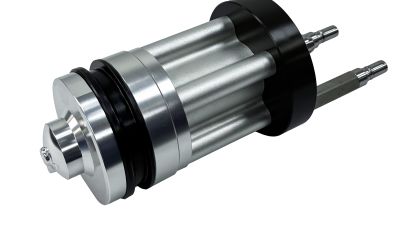
A bottom mold is one of the most functional parts of a PET blow molding mold set. Designed for 459 ml PET bottles, this component is made from high-quality aluminum to provide reliable forming performance and compatibility with existing rotary blow molding machines. Its role is to shape the bottle base accurately during the blowing process, helping maintain consistent dimensions and reducing production variation on fast-moving lines.
In many packaging projects, the bottle body remains unchanged while the base requires modification after market testing, line optimization, or functional evaluation. A flexible replacement and customization service allows producers to adjust the bottom structure without redesigning the complete mold set. This approach can support faster improvements, lower equipment disruption, and more adaptable production planning for evolving PET packaging requirements.
Blow moulding makes hollow plastic products by expanding heated material inside a mould. Compressed air forms the final shape. The process suits bottles, ducts, drums, and containers.
A machine creates a soft plastic tube called a parison. Air expands it against the mould walls. This method suits larger products and steady production runs.
It forms a precise preform around the product neck. The preform then enters a blowing mould. It suits small bottles and containers needing clean details.
The preform is reheated and stretched lengthwise and sideways. This often creates clear, lightweight bottles with improved strength. The result can look excellent.
Common categories include household packaging, food containers, personal care packs, and technical parts. Different shapes require different tooling. One mould rarely fits every market.
Ask for cycle time, cavity count, uptime, and verified output. Use the intended resin and mould during testing. A rated output may fall after cooling, changeovers, and rejected parts.
Thin corners, handles, and bases can weaken during drops. Request thickness maps from finished containers. A small weight reduction saves material, but excessive reduction may cause failure.
No. Certification shows a quality-management system, not perfect wall uniformity. Check calibration records, training, traceability, and corrective actions. A live production trial reveals more.
Blow Moulding Products serve a wide range of global markets because the process can create lightweight, hollow, and durable plastic parts in high volumes. The three core processes—extrusion blow moulding, injection blow moulding, and stretch blow moulding—support different product needs. Packaging remains the largest application, representing 40.5% of plastics use in the EU in 2022. PET bottles are widely used for beverages, while HDPE containers provide reliable packaging for food, household products, and industrial chemicals, with recyclability increasingly influencing purchasing decisions.
Beyond packaging, industrial drums and tanks require careful design and recognized UN packaging codes when intended for regulated transport. Automotive applications include air ducts, fuel tanks, and fluid reservoirs, where dimensional accuracy and consistent wall thickness are essential. For international buyers, a practical scorecard should assess production capacity, wall control, output stability, quality systems, and ISO 9001 certification. Evaluating these factors helps buyers select products that balance performance, safety, efficiency, and long-term supply reliability.