Choosing a reliable Csd Bottle Moldmanufacturer in China isn’t just about comparing prices from catalogs. Real buyers know they need more than that — they want steady production, precise engineering, and honest communication. A good supplier should understand the ins and outs of carbonated soft drink packaging — from designing the preform to achieving high-speed Blow Molding without a hitch.
An experienced manufacturer doesn’t just look good on paper; they consider details like cavity balance, cooling channels, gate positions, neck finish precision, and the choice of mold steel. These little things can make a big difference — affectinG Bottle clarity, how well it resists pressure, cycle times, and how much maintenance is needed. Honestly, practical experience counts a lot. A mold might look perfect in drawings, but if it struggles in real-life continuous production, it’s not worth the hype. That’s why testing in real production conditions is absolutely essential.
Dr. John Bozzelli, an injection molding expert, often says, “Quality is built into the process,” and honestly, that’s true for Csd Bottle Mold manufacturing too. A reliable Chinese supplier should offer design reviews, flow analysis, trial reports, dimensional checks, and solid after-sales support. Keeping good records makes it easier for buyers to ensure consistency, whether they’re replacing parts or planning future projects.
Of course, nobody’s perfect. Sometimes, after prolonged runs, small cooling differences can creep in. And miscommunications might delay necessary adjustments. Good suppliers acknowledge these issues rather than hide them. They’re open to factory inspections, explain technical limitations honestly, and keep improving their designs based on real feedback.
For global buyers, finding the right partner meant combining solid engineering skills with trustworthy project management. Look for consistent tolerances, documented testing, experience exporting, and fast, friendly service. Yes, price matters, but reliable production is what really protects your big investment. A carefully chosen Chinese supplier can help keep the molding process smooth, ensure consistent bottle quality, and build a long-term partnership. The details really do count — and it’s worth verifying them all.
CSD Bottle Mold Manufacturing: An Overview for Global Buyers
A reliable CSD bottle mold begins with the bottle design, resin choice, and production target. For carbonated soft drinks, the mold must support even wall distribution and stable pressure resistance. Experienced manufacturers study neck finishes, base geometry, thread accuracy, and label clearance before machining. An OEM Csd Bottle Mold may use hardened mold steel, precision CNC equipment, and controlled cooling channels. These details influence cycle time, bottle clarity, and long-term maintenance. Small venting errors can leave cloudy marks or uneven surfaces.
Tips: Request a 2D drawing, 3D model, steel specification, and mold-flow review. Ask how the supplier measures cavity balance and cooling performance. A trial report should include cycle time, bottle weight, dimensions, and pressure-test results. Check spare inserts, wear parts, and service response before placing an order. Samples matter more than promises.
Global buyers should also confirm compatibility with their blow-molding machine, preform neck standard, and factory utilities. Clear communication prevents costly changes after machining begins. Remote approval can work, but physical samples reveal details that photos often miss. A mold may pass visual inspection yet produce inconsistent bottles during extended production. That weakness deserves honest review. Reliable suppliers document corrections, protect cavity alignment, and provide maintenance guidance for operators. Temperature records and scheduled cleaning can help preserve surface quality over repeated cycles.
For global buyers, a CSD bottle mold must balance pressure resistance, cooling efficiency, and repeatable production. The material choice affects every cycle. Hardened tool steel suits mold bases and high-wear components. Stainless steel helps resist corrosion in humid production areas. Aluminum cavities offer faster heat transfer and easier handling, but they may need stronger surface protection.
An ODM Csd Bottle Mold should match the bottle’s neck finish, volume, base design, and filling process. Engineers should control parting lines carefully. Poor alignment can leave visible seams on transparent bottles. Cooling channels need even spacing around the cavity. Uneven cooling may create distortion, weak areas, or inconsistent bottle weight. Venting also matters. Trapped air can mark the surface and reduce detail.
Practical testing reveals problems that drawings miss. A mold may pass dimensional inspection but still show slow cooling during long production runs. We check cavity polish, guide systems, exhaust paths, and changeover access. These details reduce maintenance time. The mold should also support stable preform stretching and predictable wall distribution. Some design decisions remain difficult. More cooling channels are not always better if they weaken the cavity structure. Experienced manufacturers review trial data, not only software results, before final adjustments. Acceptance criteria should include cycle stability, bottle clarity, neck accuracy, and safe operation for the intended market.
Top CSD Bottle Mold Manufacturer in China for Global Buyers
How Chinese CSD Bottle Mold Manufacturers Develop Custom Solutions
Chinese CSD bottle mold manufacturers develop custom solutions by studying each bottle’s purpose, material, and production line. Engineers review the bottle volume, neck finish, label area, grip shape, and expected cycle time. Fit comes first. A mold may look impressive, yet perform poorly if cooling channels are unbalanced.
Experienced teams use 3D modeling, flow analysis, and prototype testing before cutting steel. They select suitable mold steel, polish contact surfaces, and design vents for stable bottle formation. For lightweight PET bottles, small changes in wall thickness can affect strength, clarity, and pressure resistance. Details matter. Engineers also check compatibility with existing blow molding equipment, because a perfect design may still cause downtime on an unsuitable machine.
Quality control continues after machining. Technicians inspect cavity dimensions, cooling performance, surface finish, and mold alignment. Trial production can reveal uneven stretching, stubborn release points, or weak bottle shoulders. Not every first trial is perfect. That is useful feedback, not failure. Reliable manufacturers record these results and adjust the design with measured changes. They also provide maintenance guidance, spare-part recommendations, and clear inspection reports for overseas buyers. A careful supplier should explain limitations honestly, rather than promise unrealistic output. This practical approach helps global beverage producers receive molds that match their products, equipment, and long-term production needs.
| Solution Dimension | Typical Technical Range or Practice | How It Supports CSD Bottle Production | Customization Considerations for Global Buyers |
|---|---|---|---|
| Bottle Capacity | Common commercial sizes include 250 ml, 330 ml, 500 ml, 750 ml, 1 L, 1.25 L, 1.5 L and 2 L. | The cavity profile is designed around the target volume, fill level, panel shape and base geometry. | Buyers should provide the required capacity, label area, overall height and maximum bottle diameter. |
| Neck Finish Compatibility | PET CSD bottles commonly use standardized neck finishes selected for the closure, sealing system and filling line. | Accurate neck dimensions help control cap fit, pressure retention and compatibility with existing equipment. | The neck drawing, thread profile, tamper-evident ring requirement and closure specification should be confirmed before mold design. |
| Mold Type | Two-step PET production generally uses an injection mold for preforms and a stretch blow mold for finished bottles. | Separating preform injection from stretch blow molding allows bottle shape, material distribution and production speed to be optimized independently. | The mold design must match the buyer’s preform dimensions, blow-molding machine, transfer system and production method. |
| Cavity Configuration | Preform molds may be configured from single-cavity development tools to high-cavity production systems; blow molds are commonly supplied in multi-cavity layouts. | Cavity quantity affects output, machine requirements, mold balance, maintenance effort and investment level. | The appropriate cavity count depends on annual demand, machine capacity, cycle time, available floor space and target unit cost. |
| Mold Materials | Common choices include pre-hardened tool steel for mold bases and corrosion-resistant hardened steel for cavity inserts and high-wear components. | Suitable steel selection improves dimensional stability, corrosion resistance, wear resistance and service life. | Material selection should reflect production volume, cooling-water quality, maintenance practices and the required warranty period. |
| Cooling System | Cooling channels are arranged around the cavity and neck areas to remove heat consistently during the molding cycle. | Balanced cooling helps reduce cycle variation, deformation, uneven wall thickness and dimensional instability. | The design should consider water temperature, flow rate, connector standards, drainage and the buyer’s cooling equipment. |
| Bottle Base Design | CSD PET bottles commonly use pressure-resistant petaloid or other reinforced base geometries. | A suitable base improves stability and helps the bottle withstand internal pressure from carbonated beverages. | Base design should be validated against bottle volume, carbonation level, resin distribution, drop performance and shelf-life requirements. |
| Lightweighting Strategy | Material reduction is achieved through optimized preform weight, controlled stretch ratios and improved bottle geometry. | Lightweighting can reduce resin consumption while maintaining required pressure resistance and handling performance. | The design must be tested for top-load strength, burst resistance, leakage, drop impact and carbon dioxide retention. |
| Surface Finish | Cavity surfaces may use polished, textured or patterned finishes depending on the visual and functional requirements of the bottle. | Surface treatment affects transparency, appearance, label contact and the visibility of molded details. | A final texture sample, gloss requirement or approved reference part should be included in the technical specification. |
| Design and Simulation | 3D CAD modeling, draft analysis, wall-thickness review and airflow or cooling evaluation are commonly used during development. | Digital review helps identify undercuts, uneven material distribution, difficult ejection areas and cooling risks before machining. | Buyers can request 3D files, 2D drawings, mold-flow findings, revision records and approval checkpoints. |
| Quality Inspection | Typical checks include dimensional inspection, cavity matching, cooling-channel testing, surface inspection and trial production. | Inspection reduces cavity-to-cavity variation and confirms that the mold performs consistently under production conditions. | Acceptance criteria should define critical dimensions, allowable variation, sample quantity, trial material and performance tests. |
| Testing for Carbonated Beverage Use | Finished bottles are commonly evaluated for pressure resistance, leakage, top-load strength, drop performance and carbon dioxide retention. | Testing verifies that the bottle geometry and material distribution are suitable for filling, transport and storage. | Test conditions should reflect the buyer’s beverage formula, carbonation level, filling temperature, distribution route and storage environment. |
| Documentation Package | A professional project file commonly includes approved drawings, 3D data, material information, inspection records, maintenance instructions and spare-parts lists. | Clear documentation supports installation, troubleshooting, maintenance and future mold modifications. | Documentation should be supplied in the buyer’s required language and file formats, with revision control for all approved changes. |
| Production and Delivery Planning | A custom mold project normally proceeds through specification, design approval, machining, assembly, trial production, correction and final acceptance. | Stage-based planning reduces late design changes and makes technical approval easier for international projects. | The purchase plan should define approval dates, trial requirements, shipping documents, spare parts, packaging and after-sales support. |
Note: The ranges and practices shown are general reference information for custom PET CSD bottle mold projects. Final specifications depend on the bottle design, preform, resin, beverage properties, machine configuration and applicable market requirements.
A reliable China Csd Bottle Mold supplier treats production as a controlled engineering process, not simple metal cutting. PlasticsEurope’s Plastics—the Fast Facts 2023 reports that packaging represented 39.1% of European plastics demand in 2022. That demand makes dimensional stability essential for carbonated beverage packaging.
Production begins with certified mold steel, material verification, and controlled heat treatment. CNC machining creates the cavity and neck finish. EDM reaches narrow details that cutting tools may miss. Technicians then polish sealing surfaces and inspect cooling channels with documented measurements. During assembly, they check alignment, venting, and cavity balance. A mold can look excellent but still produce uneven walls.
Quality teams should use coordinate measuring machines, surface-finish gauges, and repeated trial runs. ISO’s Survey of Certifications 2022 recorded 1,265,216 ISO 9001 certificates worldwide, showing how widely documented quality systems are used. Yet paperwork alone cannot correct poor process control. Operators must record steel batches, machining offsets, temperature settings, and inspection results.
Small details matter. A blocked vent may leave a visible mark on a bottle. An unstable cooling circuit can increase cycle variation. A perfect first trial is rare. That reality deserves honest review, not hidden adjustment. For global buyers, traceable reports, sample approval, and clear corrective actions provide stronger assurance than attractive promises.
Evaluating a Chinese supplier for a CSD bottle mold requires more than comparing quotations. Carbonation raises pressure, so neck-finish accuracy, cavity balance, and cooling control matter. Request steel certificates, mold-flow analysis, cycle-time records, and dimensional inspection reports. Mordor Intelligence’s 2024 PET bottle market outlook forecasts roughly 4% annual growth through the decade. That pressure may encourage faster delivery. Fast is useful, but unstable cooling can create uneven wall thickness and scrap.
Tips: Ask for a live factory audit, not only photographs. Review three recent CSD projects, including cavity count, tested cycle time, and maintenance history. Require a signed acceptance plan. Check preform weight, thread gauges, leak performance, and pressure testing. Confirm spare inserts, response time, and technical support after shipment. A short call with the process engineer can reveal more than a polished sales presentation.
The PlasticsEurope Plastics—The Facts 2023 report recorded 58.8 million tonnes of plastics production in Europe during 2022, showing packaging’s large industrial scale. Global buyers should ask how the mold reduces material use without weakening the bottle. Cooling-channel design, steel hardness, and surface finish need evidence. A perfect supplier does not exist. I would still question unusually low prices. They may exclude trials, replacement parts, or export-safe packaging. Independent sampling is worth the delay.
A normalized 100-point procurement scorecard for global buyers comparing CSD bottle mold suppliers.
The scorecard gives the highest priority to mold quality and dimensional consistency, followed by production reliability, technical capability, delivery performance, and total project cost. Buyers should validate each category through drawings, sample approval, inspection records, trial results, and documented delivery commitments.
For global buyers, a CSD bottle mold manufacturer in China must offer more than polished steel and competitive pricing. OECD’s Global Plastics Outlook reports that global plastic waste reached 353 million tonnes in 2019, while only 9% was recycled. This pressure makes lightweighting, material efficiency, and stable mold performance commercially important. Experienced suppliers should verify cavity balance, cooling channels, neck-finish dimensions, and cycle targets before production. Small errors become visible as uneven bottle walls or unstable filling lines.
Csd Bottle Mold Quotes should clearly separate mold steel, hot-runner parts, testing, packaging, freight, and spare components. Export support should include commercial invoices, packing lists, certificates of origin, and ISPM 15-compliant wooden crates. Compliance also requires careful wording. Food-contact rules may apply to resins and bottles, but they do not automatically certify the mold itself. A professional supplier can provide steel certificates, inspection records, dimensional reports, and traceable component lists for buyer review.
After-sales support should include sample approval, video-based installation guidance, and response times for technical questions. Spare cooling seals and replaceable inserts help reduce production delays. UNEP’s 2023 report states that existing solutions could reduce plastic pollution by 80% by 2040, reinforcing the need for efficient, recyclable bottle designs. One weakness deserves honesty: quoted cycle times may change with resin grade, machine condition, and operator skill. Buyers should request a signed acceptance test, not rely on optimistic promises.
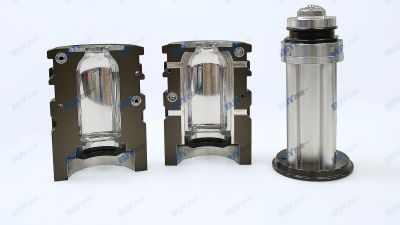
A 350 ml PET blowing mold is designed to support consistent, efficient bottle production while maintaining a clean and attractive finish. If bottles from your production line show scuff marks, uneven surfaces, or a dull appearance, the mold surface may be the underlying cause. A precision-machined cavity with a smooth, durable finish helps transfer the desired bottle shape accurately and reduces friction during demolding. Proper cooling channels can also promote more uniform material distribution, helping prevent deformation, thin spots, and inconsistent wall thickness.
This type of mold is suitable for bottled water, beverages, household products, and other everyday liquid packaging applications that use a 350 ml format. Its practical cavity design supports stable production cycles, reliable dimensional control, and efficient use of PET preforms. With suitable maintenance, including regular cleaning, inspection, and surface treatment when necessary, the mold can help reduce defects and minimize production interruptions. A well-designed structure also makes installation, replacement, and routine servicing more convenient for operators seeking dependable output and attractive bottles.
The supplier should verify certified mold steel and record each steel batch. Heat treatment must be controlled and documented. Certificates alone are not enough.
CNC machining forms the cavity and neck finish. EDM reaches narrow features that cutting tools may miss. Polishing improves sealing surfaces.
Technicians should inspect cooling channels and record their measurements. Stable cooling supports consistent cycle times and wall thickness. Blocked channels can create scrap.
Poor venting may leave visible marks on the bottle. Uneven cavity balance can produce inconsistent walls. The mold may look perfect.
Request steel certificates, inspection reports, mold-flow results, and trial-run records. Ask for machining offsets and temperature settings. Missing records deserve careful questions.
Request a live factory audit and review three recent projects. Check cavity counts, tested cycle times, and maintenance history. Photos can hide problems.
Use sample approval, thread gauges, leak checks, and pressure testing. Review preform weight and dimensional results. One successful trial is not conclusive.
Confirm spare inserts, response times, technical support, and safe packaging. Require a signed acceptance plan. Delays can be frustrating, but rushed approval creates larger risks.
This guide provides global buyers with a practical overview of Csd Bottle Mold manufacturing in China, covering the materials, engineering principles, and design standards commonly used for carbonated soft drink packaging. It explains how manufacturers develop customized mold solutions based on bottle shape, capacity, neck finish, production speed, and equipment compatibility. Buyers will also learn about key production stages, including precision machining, heat treatment, surface finishing, testing, and quality control, which help ensure dimensional accuracy, durability, and consistent bottle performance.
The article also outlines how to evaluate Chinese suppliers by reviewing their technical capabilities, manufacturing experience, inspection systems, communication, and project management practices. In addition, it discusses export preparation, documentation, packaging, compliance with applicable market requirements, delivery coordination, installation guidance, spare parts, and after-sales support. With a structured evaluation process and clear technical specifications, international buyers can reduce project risks and select a reliable partner for customized Csd Bottle Mold projects.