 Chinese





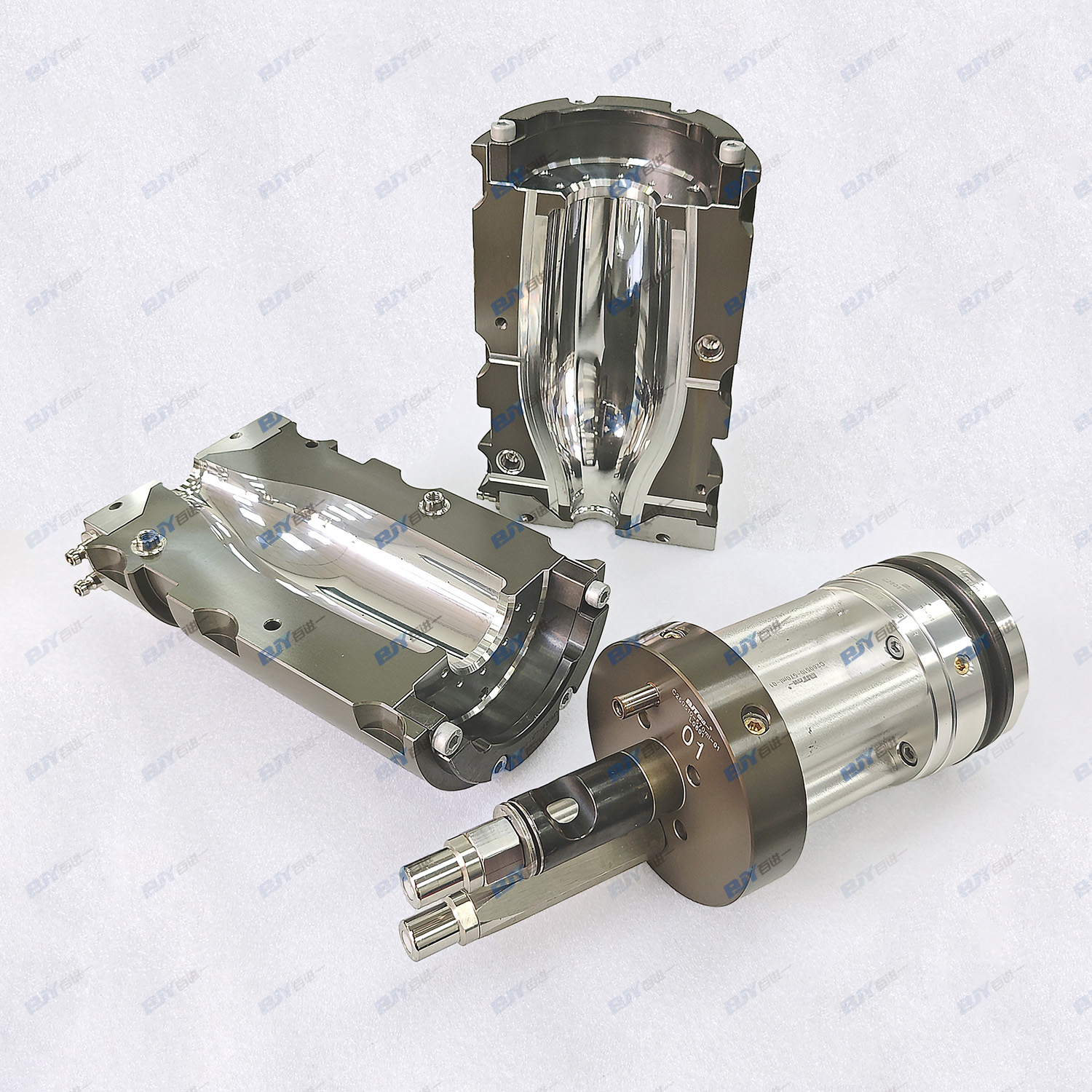
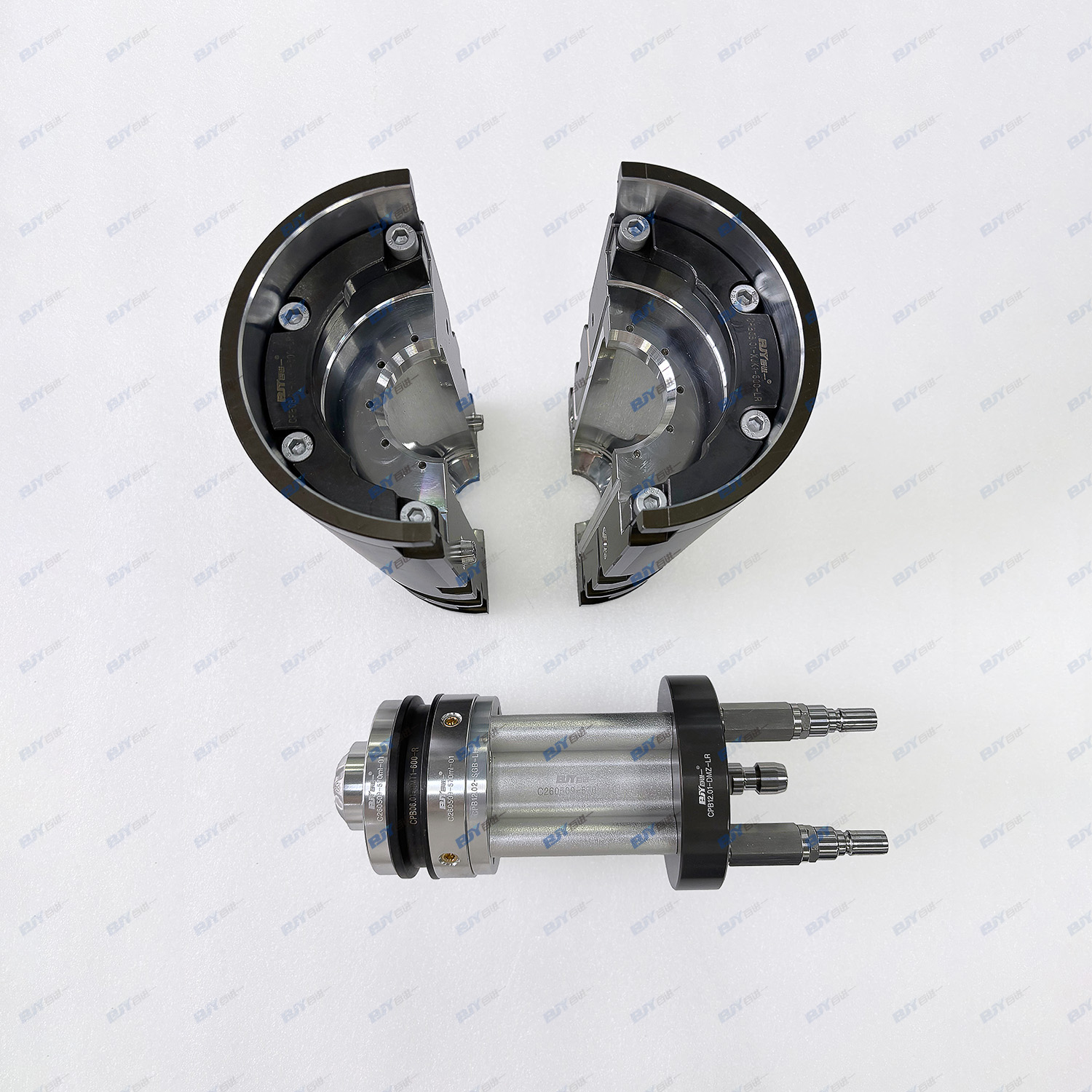
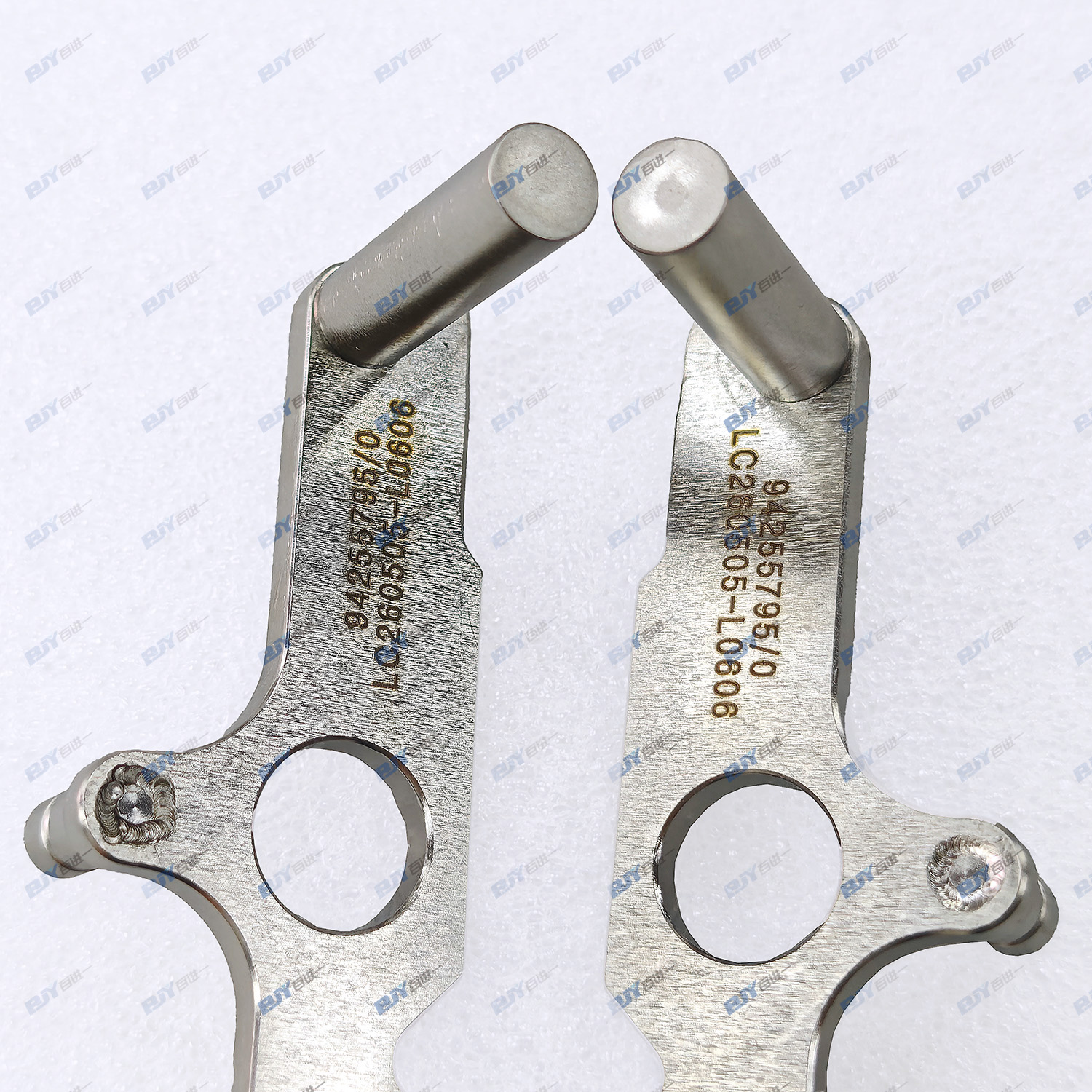
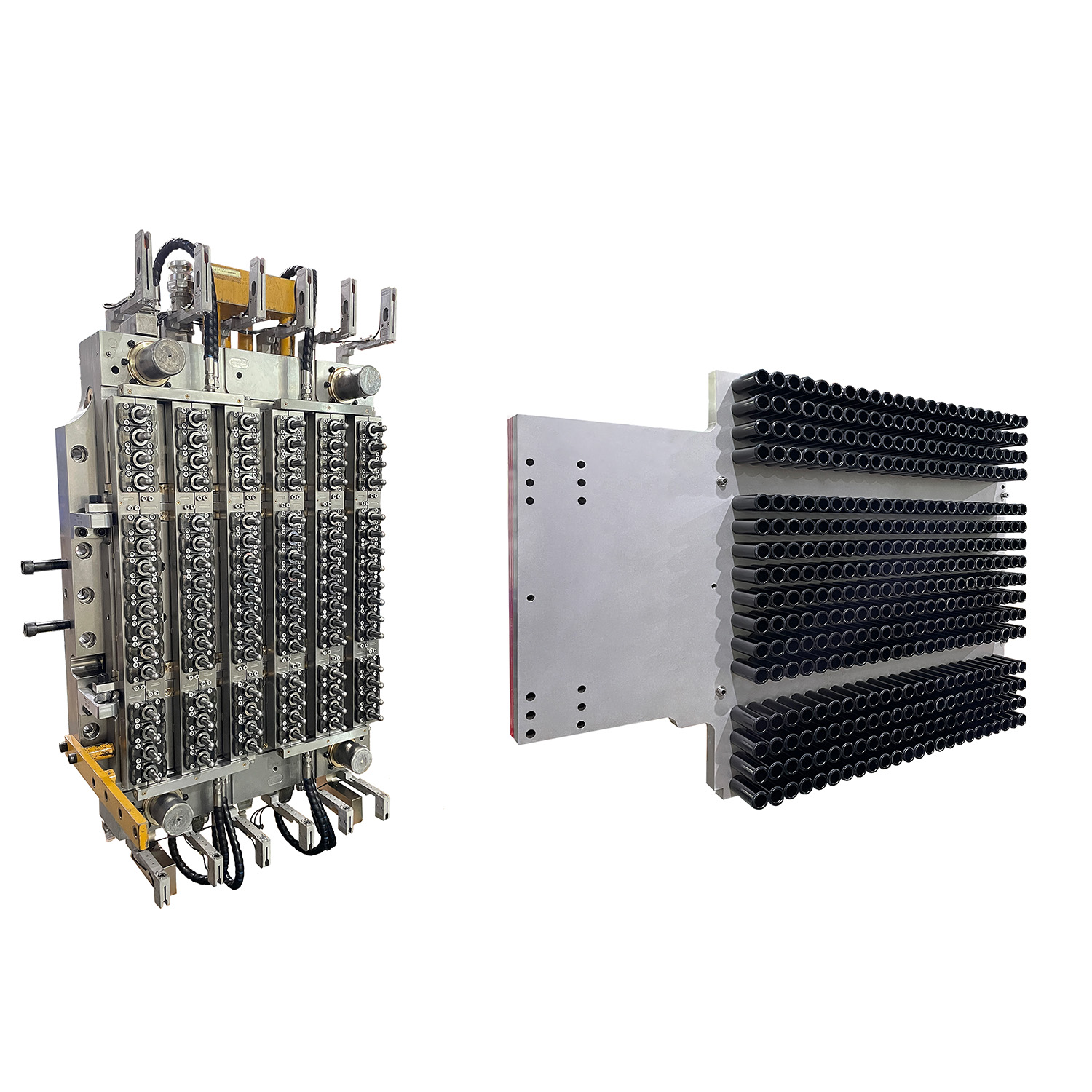
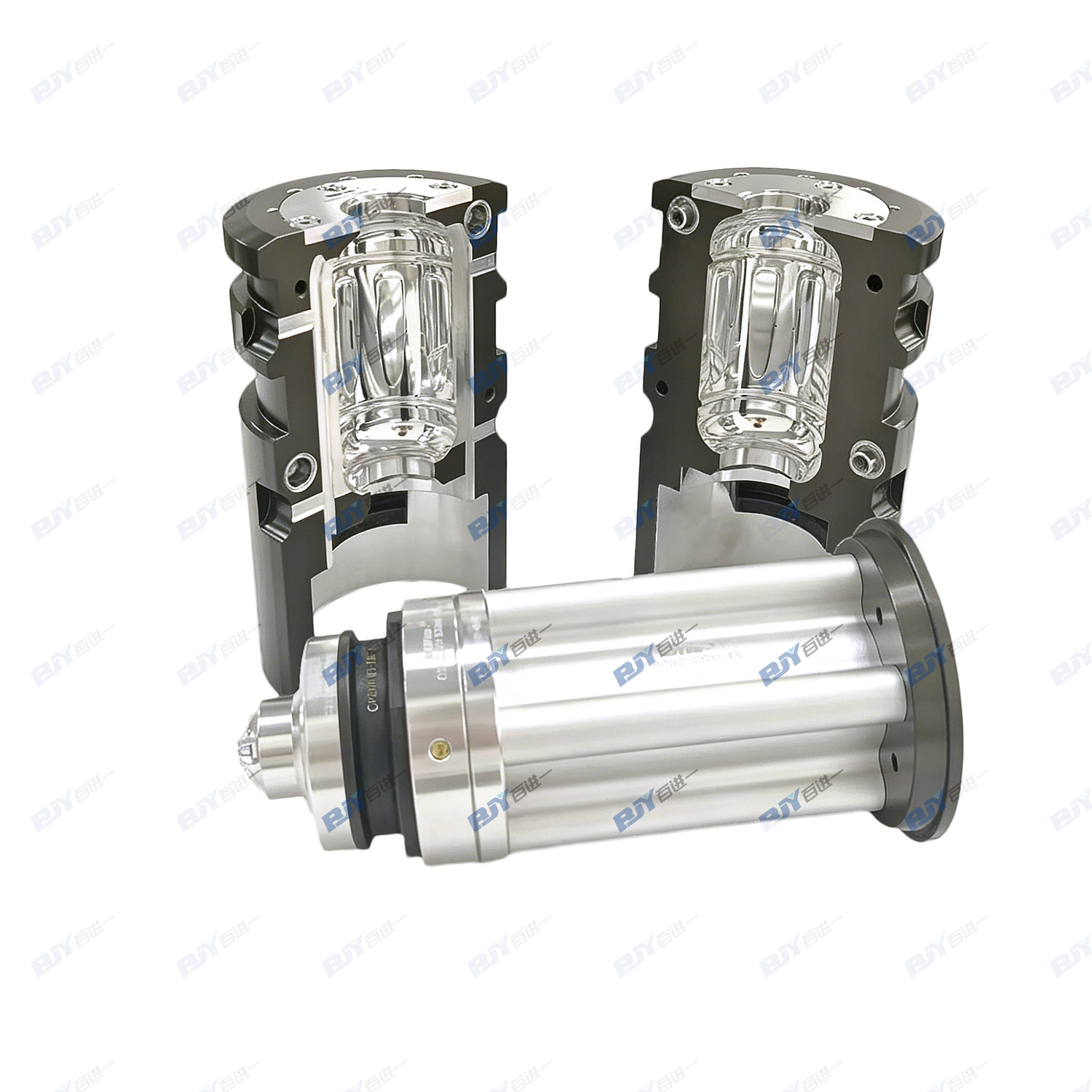
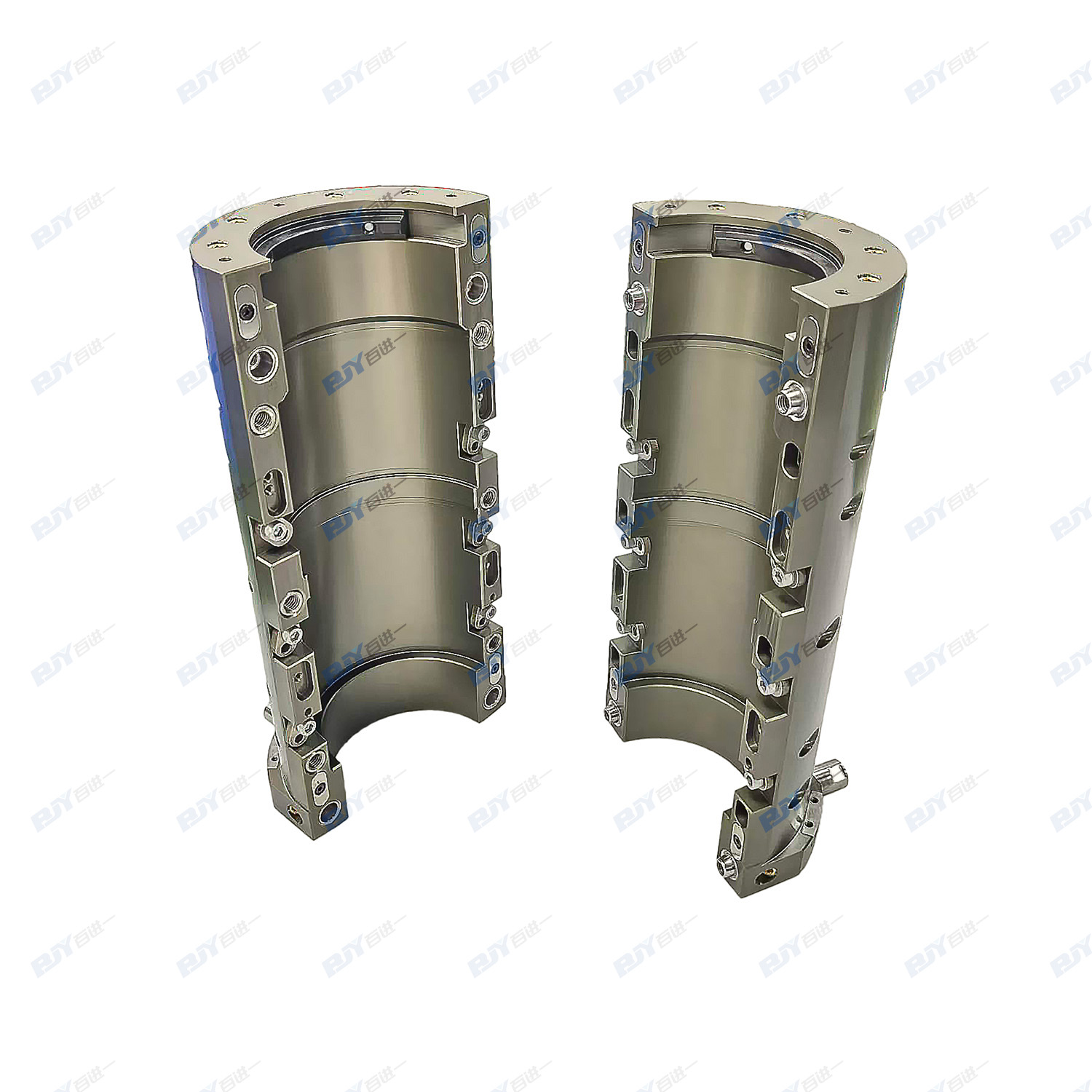
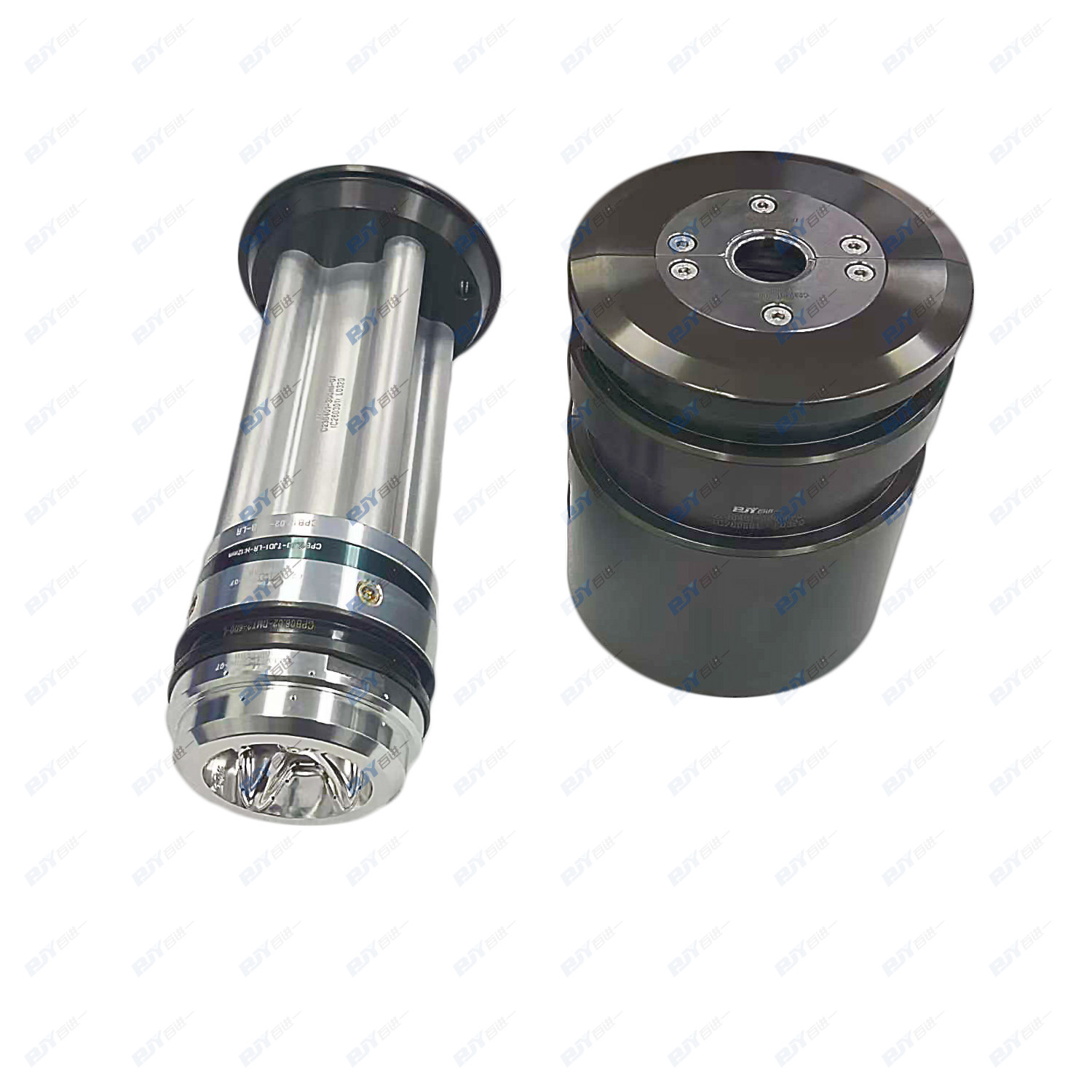
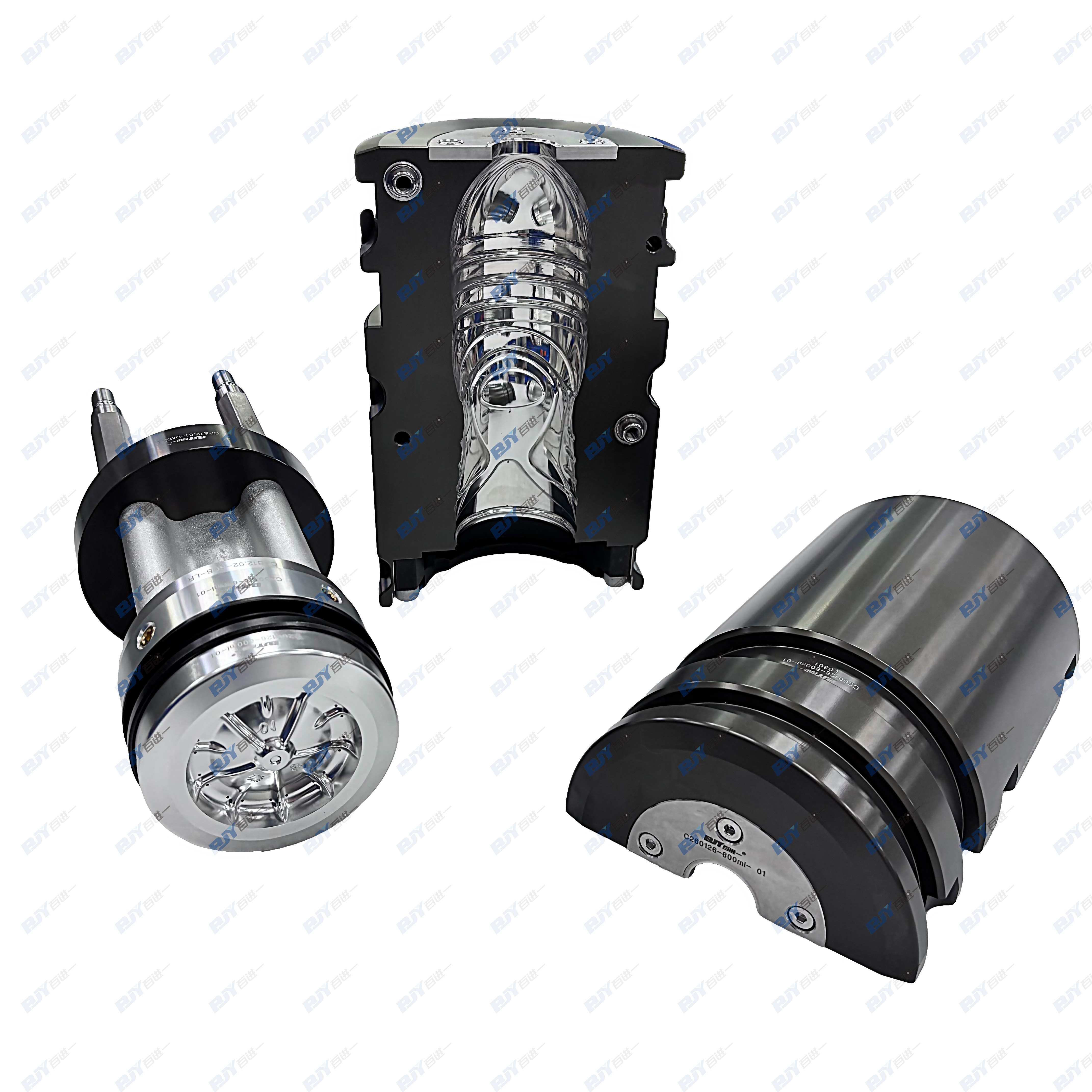
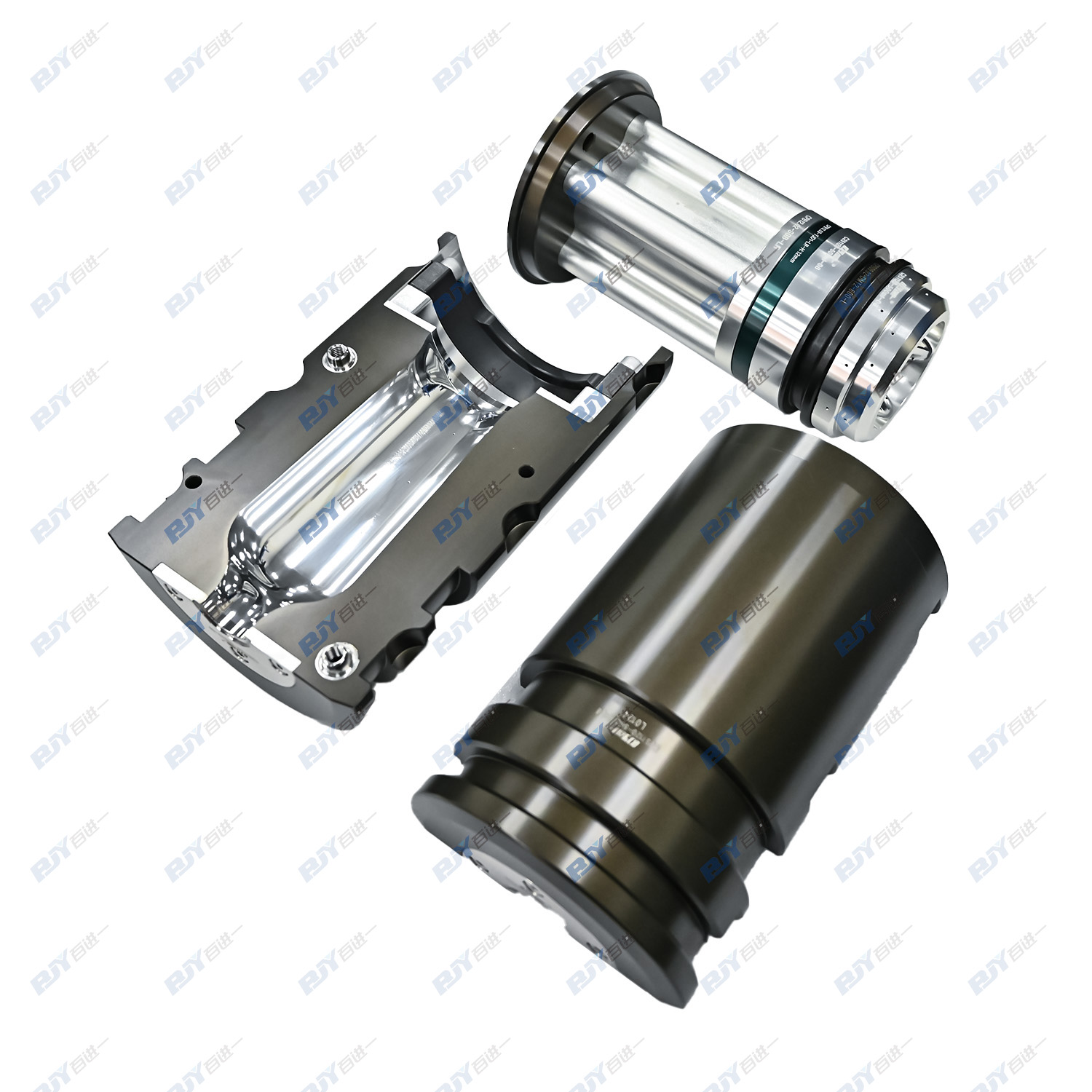
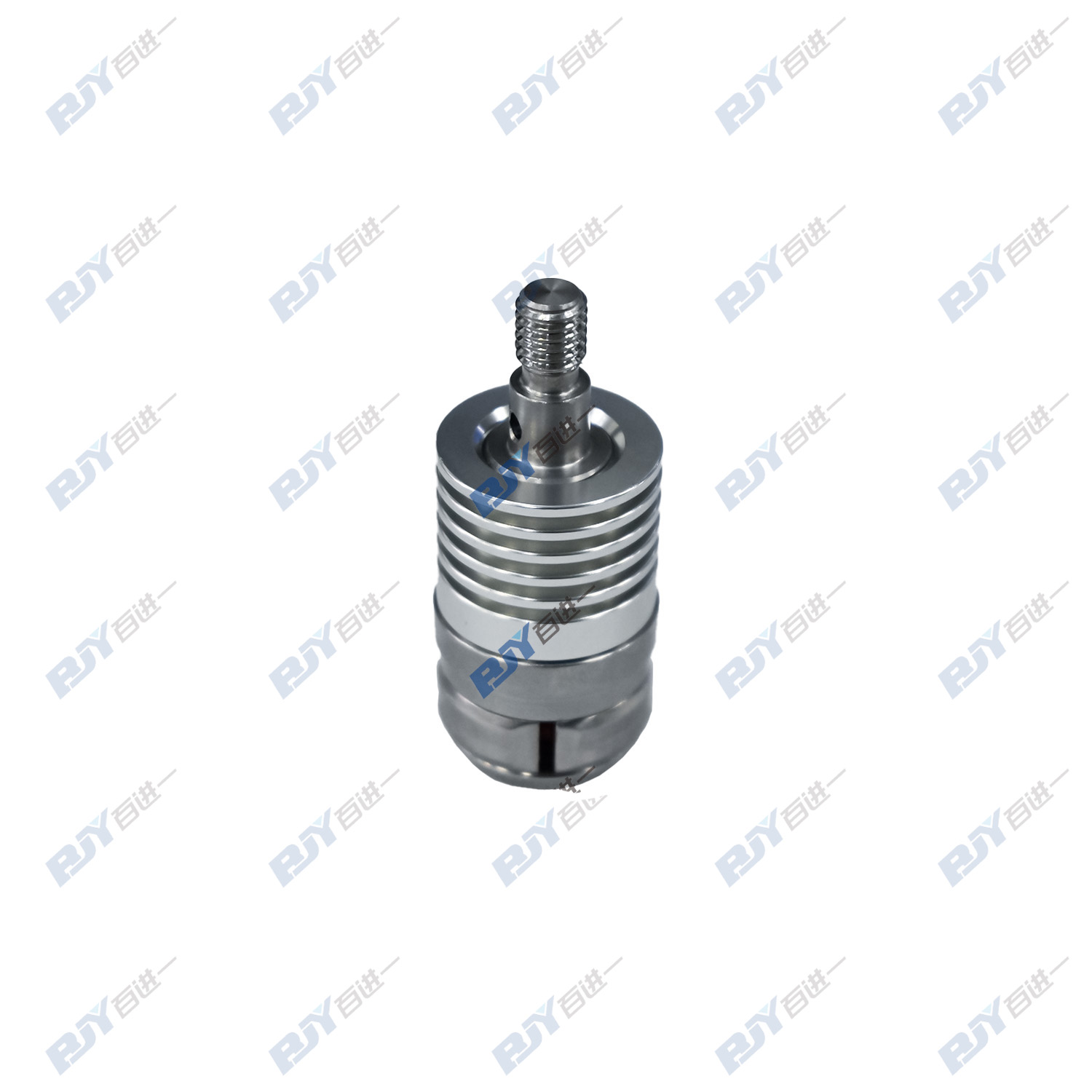
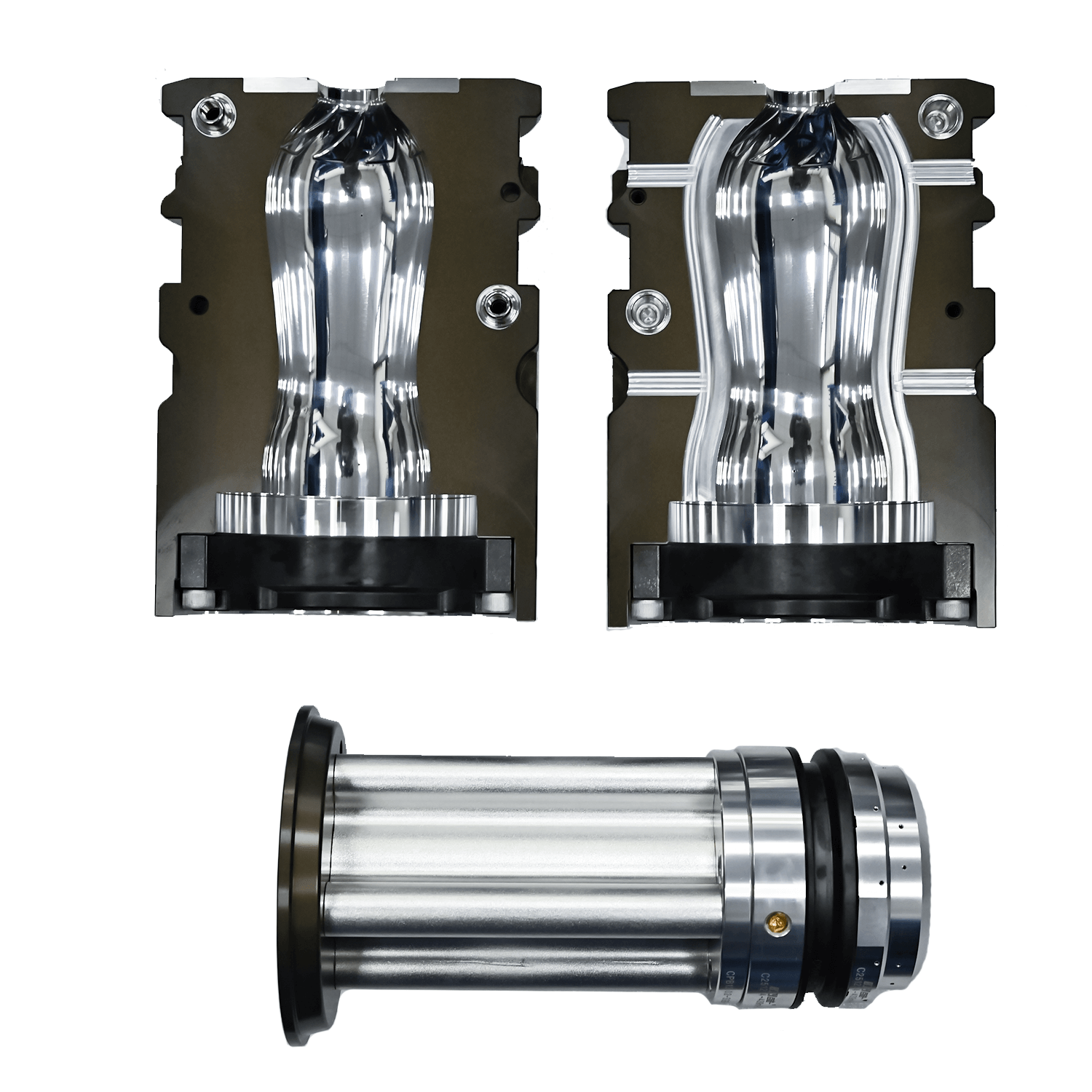
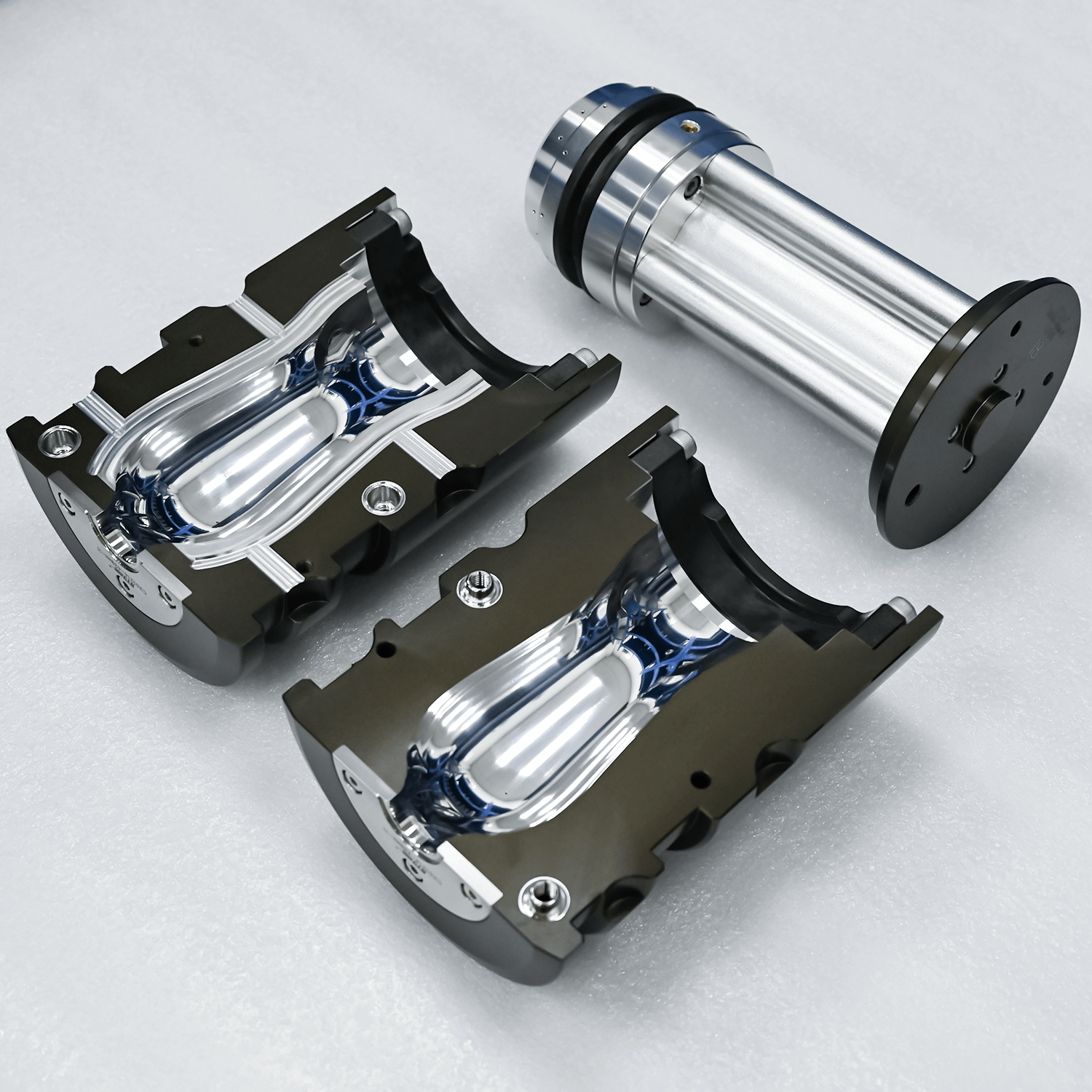
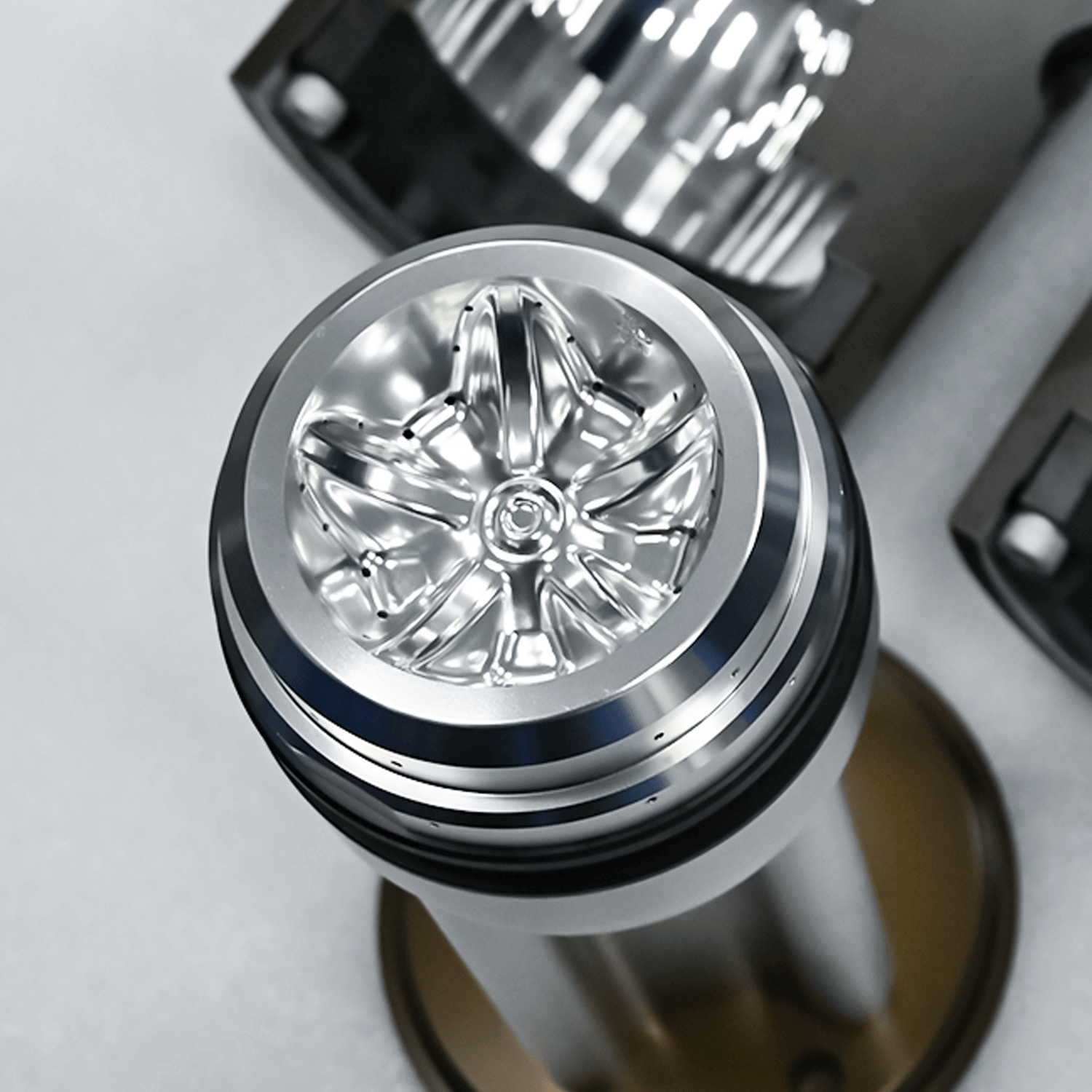
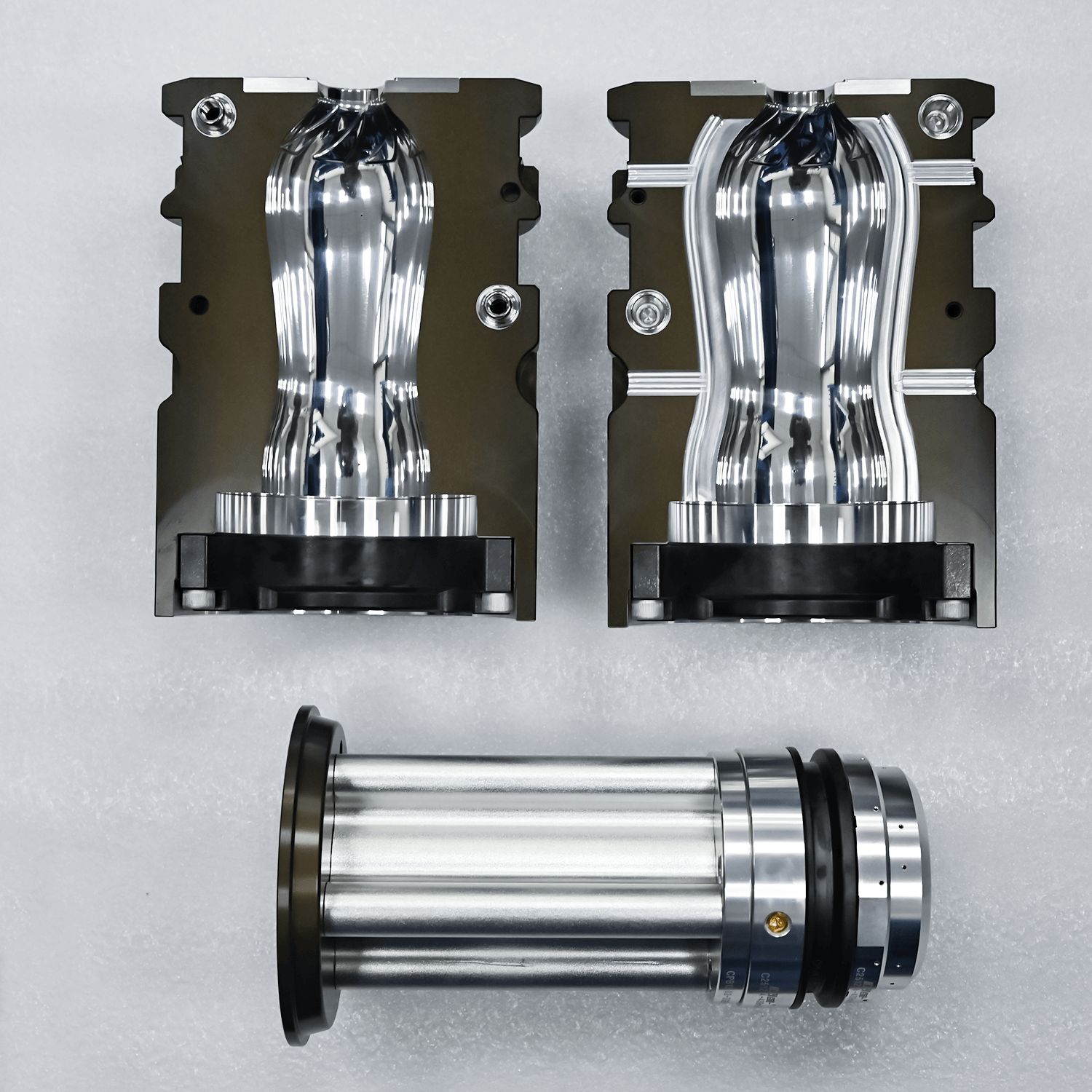
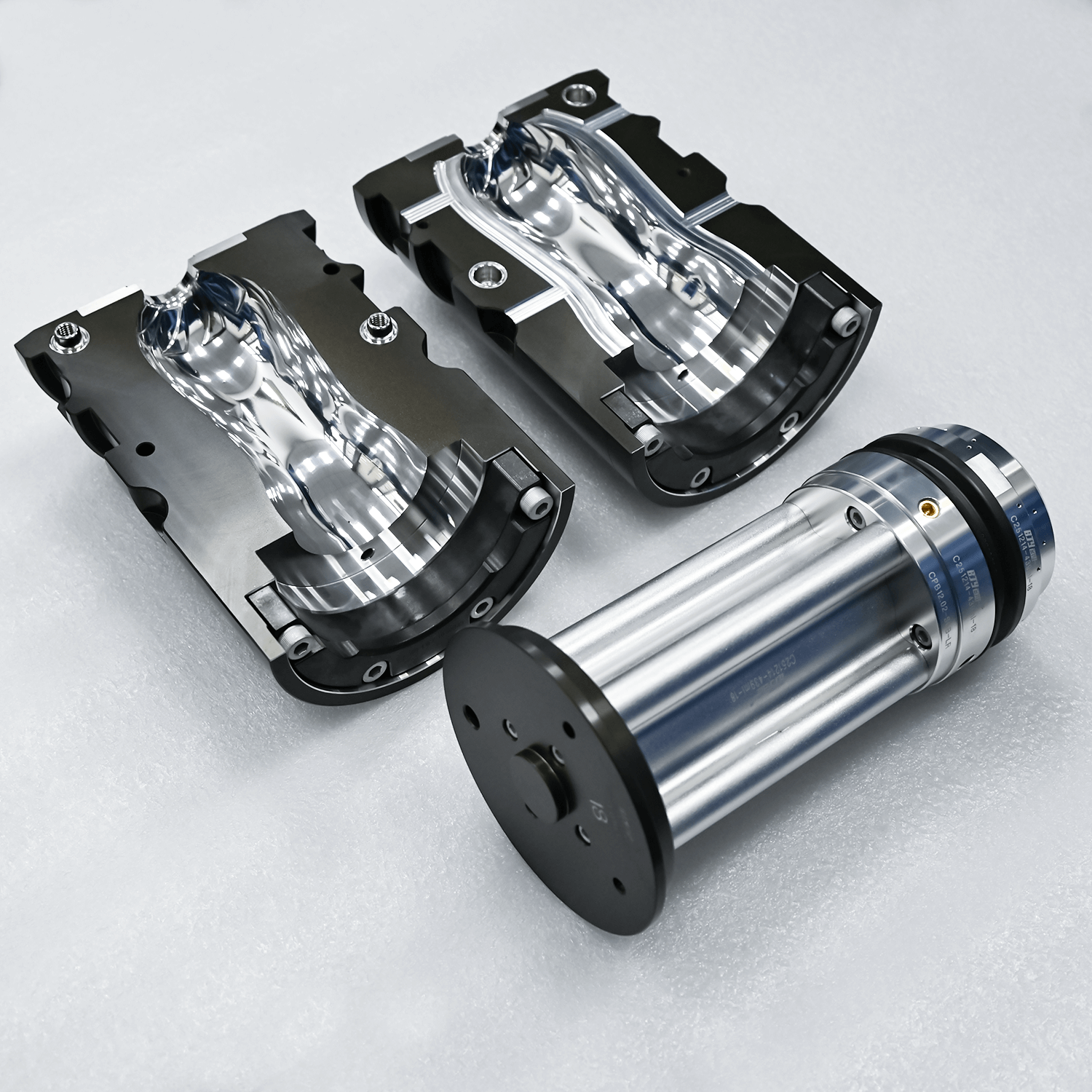
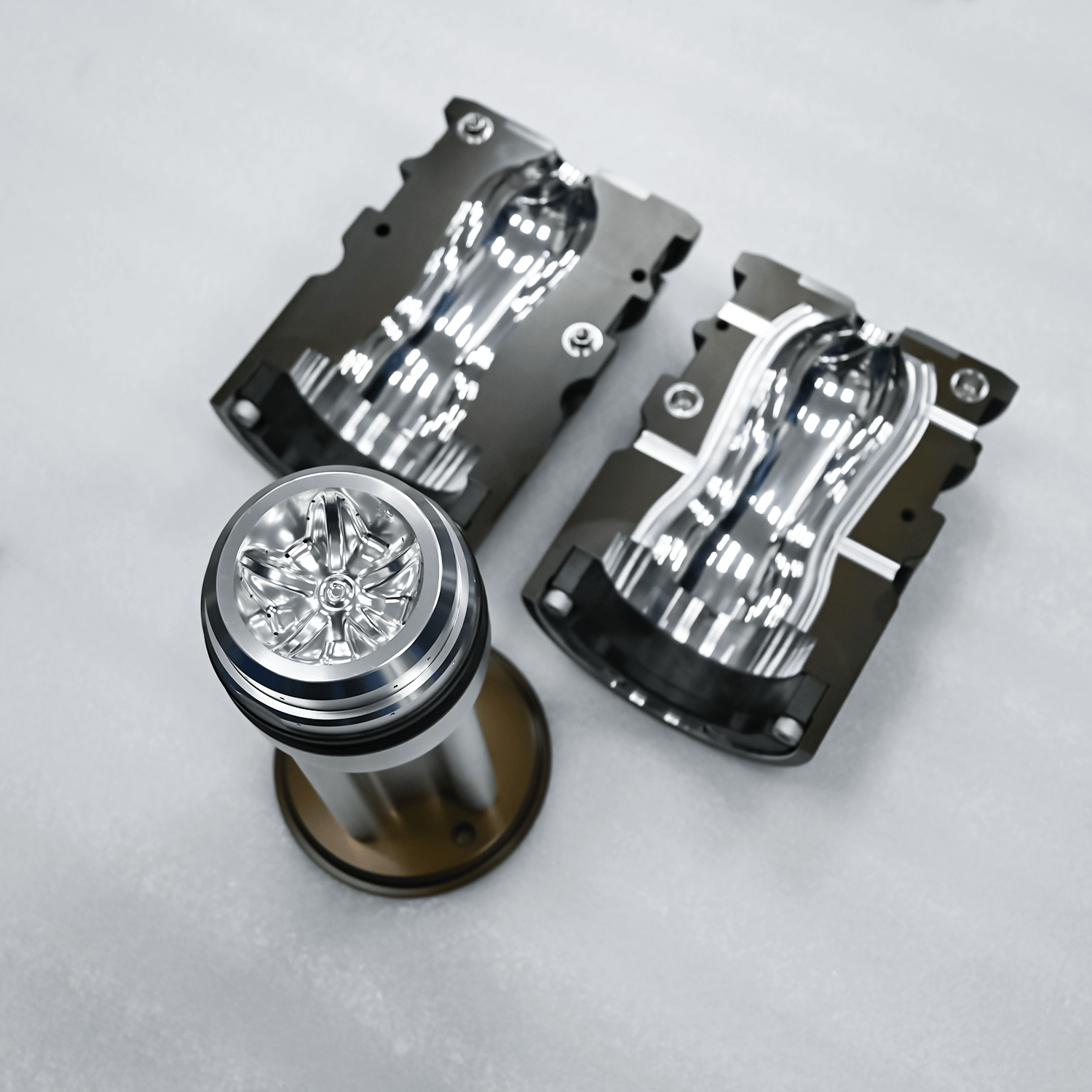
500ml Blow Mold for SIPA
Mold Material and Build Quality
The mold is produced using imported aluminum alloy commonly applied in high-speed blowing applications. In practical production, aluminum selection directly influences cooling behavior and cycle stability. Poor material choice often results in inconsistent bottle thickness or long-term deformation after extended operation.
This aluminum grade allows heat to be transferred and released efficiently, helping the mold maintain stable forming conditions even when production speed increases. All cavities are CNC-machined and finished with attention to surface smoothness, which contributes to bottle transparency and repeatability.
Main Specifications
Type: PET blow mold
Bottle size: 500ml
Mold dimension: Ø150 × 373.1 mm
Machine type: SIPA rotary blow molding system
Line application: Aseptic / sterile bottling
Material: Imported aluminum alloy
Function: PET preform blowing and shaping
How the Blowing Process Works
PET bottles are formed through a biaxial stretching process that takes place between the glass transition temperature and the crystallization temperature of the material. Within this window, PET remains elastic enough to be stretched without losing clarity.
During blowing, molecular chains are stretched in both axial and radial directions. This orientation is what gives the finished bottle its mechanical strength, including resistance to tension, impact, and internal pressure.
A typical blowing sequence includes stretching, pre-blowing, final blowing, air exhaust, and—when required for hot-fill bottles—a short cooling blow. Although these steps are completed in a very short time, the interaction between stretching and pre-blowing largely determines final material distribution.
Process Control Considerations
In actual production, stable results depend less on theoretical settings and more on fine adjustment of key parameters, including:
Stretch rod timing and movement speed
Pre-blow pressure and airflow volume
Pre-blow start and cut-off timing
Overall preform temperature consistency
Temperature difference between inner and outer preform walls
If these factors are not balanced, problems such as thin walls, poor base strength, or unstable bottle geometry may appear.
Recommended Operating Ranges
Blowing temperature: 85–115°C
Within this range, PET can be shaped efficiently and remains clear after cooling.
Stretch ratios:
Radial: generally kept below 3.5–4.2
Axial: generally kept below 2.8–3.1
Maximum preform wall thickness: ≤ 4.5 mm
Staying within these limits helps avoid excessive stretching while maintaining sufficient bottle strength.
Product Highlights
Suitable for high-speed rotary blowing
Compatible with SIPA aseptic systems
Stable bottle geometry and wall distribution
Efficient cooling behavior
Designed for continuous production rather than short runs
Typical Uses
Aseptic bottled water
Dairy beverages
Juice and tea products
Hygienic liquid food packaging
About BJY
Foshan Baijinyi Precise Technology Co., Ltd. (BJY) was established in 2011 and specializes in PET mold solutions for the beverage and packaging industry. Over years of cooperation with customers running high-speed and aseptic lines, BJY has accumulated practical manufacturing experience that feeds directly back into mold design and process compatibility.
BJY focuses on stable production performance rather than purely theoretical specifications.
For additional company and product information, please visit:
www.bjypetmold.com
description2